

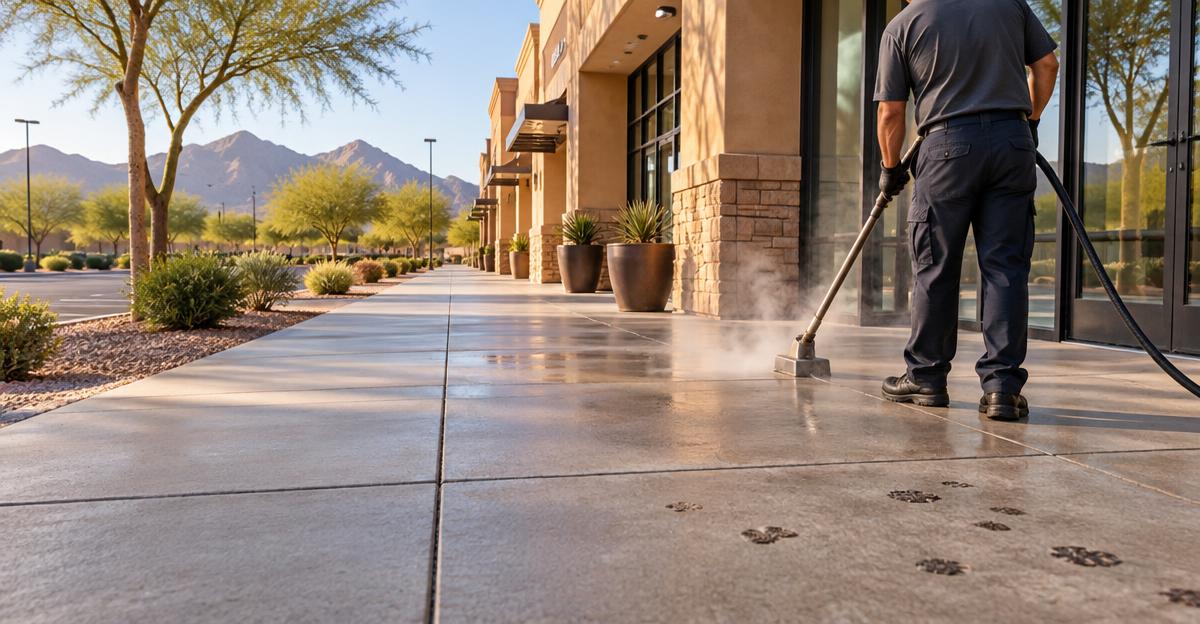
Commercial Sidewalk Gum Removal In Phoenix, AZ
Professional Commercial Gum Removal for Phoenix Walkways
Chewing gum does not wash away with rain or regular hose pressure. Once it hits concrete, it bakes in the heat, absorbs dirt, and turns into a hard black spot. Storefronts lose their clean, professional appearance when the entryway is covered in these dark stains.
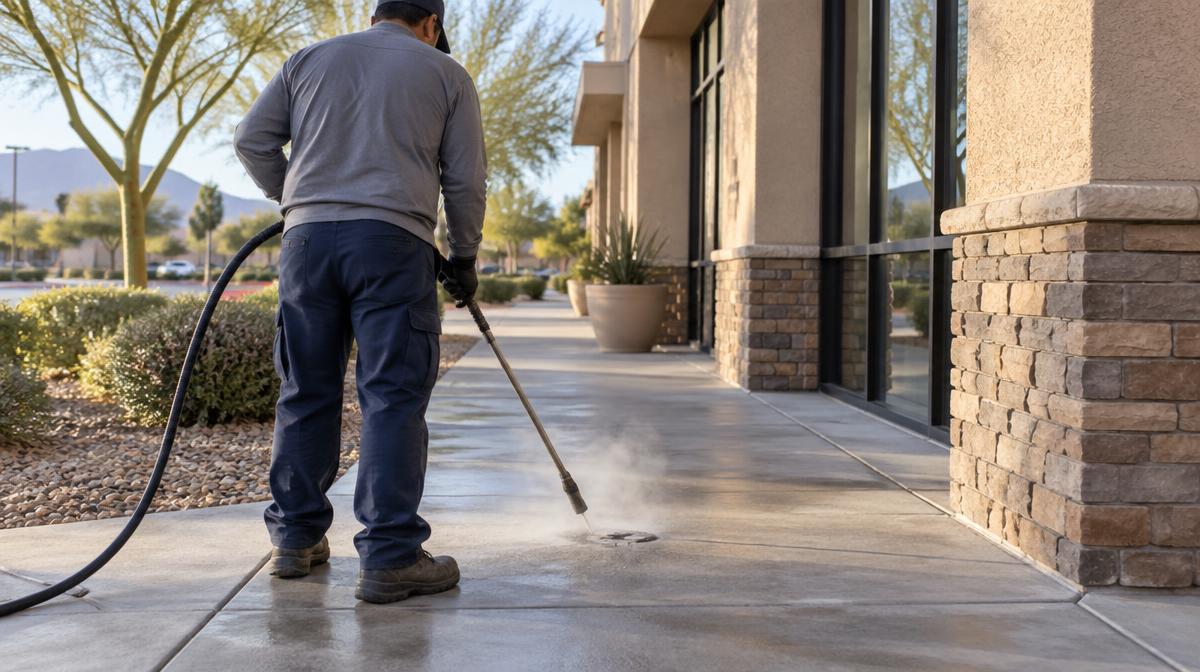
This guide explains why commercial sidewalk gum removal Phoenix AZ requires specific heat and pressure settings. You will learn how hot-water extraction lifts chewing gum without scarring the concrete beneath it, and what determines the cost of maintaining a clean commercial property.
Written by the exterior cleaning team at Miracle Maintenance, a Scottsdale-based commercial property maintenance company with over 25 years of Arizona surface cleaning experience.
Customers notice the ground they walk on before they walk through your doors. A sidewalk spotted with black gum tells visitors the property is ignored. Left untreated, those spots permanently bond to the concrete finish.
This guide outlines how hot-water pressure washing removes gum safely, why cold water damages concrete, and how to keep your walkways clear year-round.
In This Guide
- Why chewing gum ruins concrete
- The impact of Arizona heat
- The professional removal process
- Hot water vs. Cold water extraction
- Why hot water beats scraping
- Mistakes that damage concrete
- Wastewater compliance
- High-traffic target zones
- Concrete sealing protection
- Maintenance intervals
- Spot cleaning vs. Full surface washing
- Cost drivers for gum removal
- Questions to ask a contractor
- Frequently asked questions
Key Takeaways
- Chewing gum removal from concrete requires water heated to at least 200 degrees.
- Cold-water pressure washing forces operators to use high pressure, which chips and etches the concrete surface.
- Gum turns black because the sticky resin traps dirt, oil, and foot traffic debris.
- Environmental compliance requires capturing and filtering wastewater to keep gum residue out of storm drains.
- Regular commercial sidewalk cleaning Phoenix programs prevent gum from bonding permanently to porous concrete.
Why Chewing Gum Ruins Commercial Sidewalks
Dropped gum causes immediate aesthetic damage, but the real issue is how it interacts with the sidewalk surface over time.
The Stick Phase
Fresh gum adheres instantly to the porous surface of concrete or brick.
The Bake Phase
Arizona sun heats the sidewalk, melting the synthetic resins and pushing them deeper into the concrete pores.
The Dirt Trap
The sticky surface grabs shoe dirt, parking lot oil, and airborne dust.
The Black Spot
Once saturated with debris, the gum hardens into a dense black disc that looks exactly like an oil stain.
The Concrete Bond
After several weeks, the gum forms a bond that is stronger than the top cream layer of the concrete itself.
Why Phoenix Weather Makes Gum Removal Harder
Standard cleaning advice often fails in the desert. Extreme temperatures change how gum behaves on hard surfaces.
High Surface Temperatures
Concrete in direct sun can reach 150 degrees, keeping gum in a semi-melted, highly adhesive state.
Rapid Evaporation
Cleaning chemicals dry out before they have time to break down the gum resins.
Deep Penetration
Heat causes the polymers to expand and flow deep into the microscopic voids of the concrete finish.
Hardening Cycles
Cool desert nights followed by intense daytime heat cause the gum to expand and contract, locking it into the surface.
Dust Accumulation
Dry, dusty winds provide a constant supply of dirt to embed in the sticky gum surface.
The Professional Gum Removal Sequence, Step by Step
Proper chewing gum removal from concrete follows a strict sequence to ensure the spot disappears without leaving a lighter mark on the sidewalk.
Area Assessment
Identify the type of concrete finish and note pre-existing damage, cracks, or loose aggregate.
Site Protection
Divert foot traffic and protect nearby doors, windows, and landscaping from overspray.
Water Heating
Bring the self-contained boiler system up to 200 to 250 degrees Fahrenheit.
Low-Pressure Melting
Apply steam or hot water directly to the gum to break the polymer bonds.
Gentle Extraction
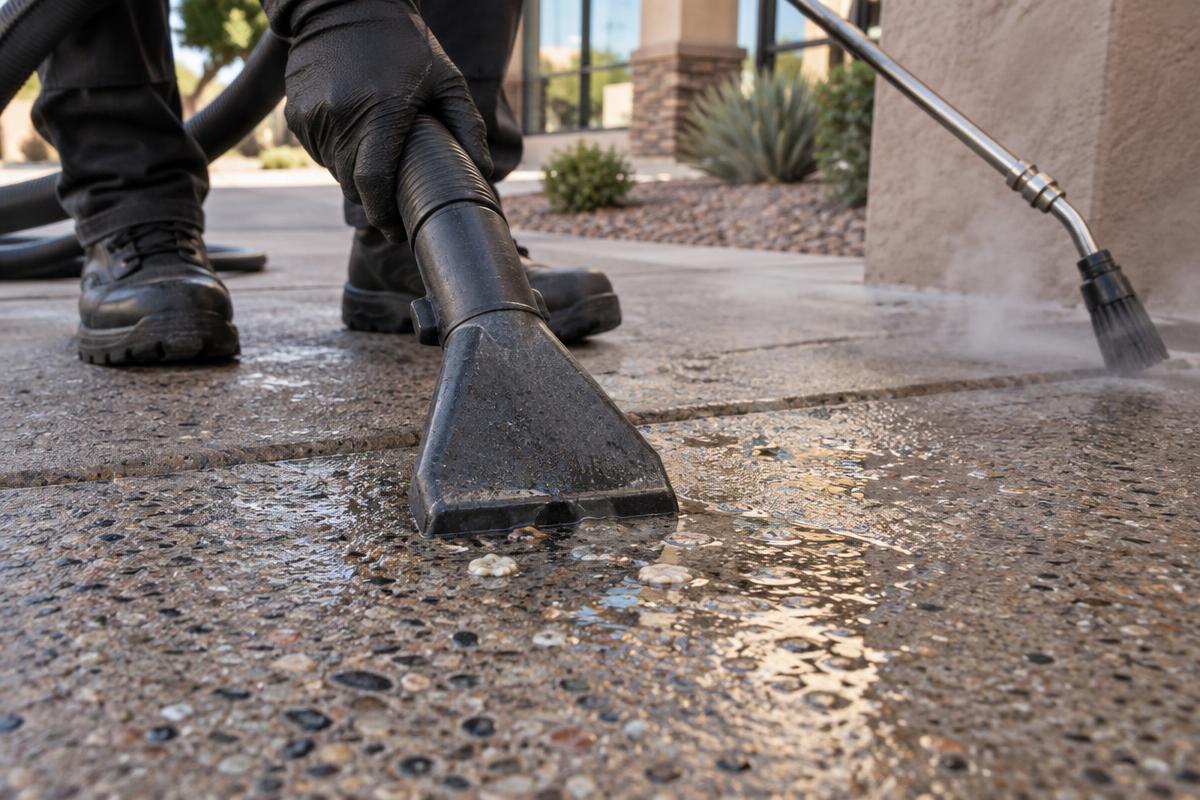
Use a specialized fan-tip nozzle to lift the softened gum off the surface without carving the concrete.
Surface Blending
Wash the surrounding area so the cleaned spot matches the rest of the sidewalk.
Wastewater Recovery
Vacuum or route the runoff to comply with local storm drain regulations.
Debris Collection
Gather the lifted gum wads for proper disposal in solid waste bins.
Hot Water Extraction vs. Cold Water Pressure Washing
The temperature of the water dictates how much pressure the operator has to use. The more pressure used, the higher the risk of damaging the walkway.
| Method | Water Temperature | Pressure Required | Risk to Concrete | Gum Removal Effectiveness |
|---|---|---|---|---|
| Professional Hot Water | 200 to 250 degrees | Low to moderate | Very low | Melts and lifts gum completely |
| Standard Cold Water | Ambient | Very high | High risk of etching | Chips gum, often leaves a stain |
| Steam Wands | Over 250 degrees | Very low | Zero | Excellent for indoor or delicate stone |
| Chemical Solvents | Varies | None | Low | Leaves chemical residue, smears easily |
Why Hot Water Beats Scraping and Chemicals
- Melts the synthetic rubber instead of trying to shear it off by force.
- Requires less pressure, protecting the cream layer of the concrete finish.
- Eliminates the need for harsh solvents that can discolor decorative stamped concrete.
- Sanitizes the surface by killing bacteria associated with food waste and foot traffic.
- Cleans the surrounding concrete simultaneously, providing a uniform appearance.
Cleaning Mistakes That Damage Concrete
High-Pressure Blasting
Using zero-degree tips with cold water blows away the top layer of concrete alongside the gum.
Wire Brushing
Metal bristles leave permanent scratch marks on smooth trowel and broom finishes.
Caustic Chemicals
Pouring heavy solvents on the spot often bleaches the concrete, leaving a permanent white ring.
Dry Scraping
Forcing a putty knife under hardened gum frequently chips the concrete away with the debris.
Spot Cleaning Only
Removing just the gum leaves bright, clean circles scattered across a dirty gray sidewalk.
Wastewater Recovery and Environmental Compliance
Commercial sidewalk cleaning Phoenix involves more than just washing debris away. Federal and municipal regulations prohibit discharging wastewater containing oils, cleaning agents, or solid waste like gum into storm drains.
Professional crews use surface cleaners equipped with vacuum recovery systems. These tools capture the water and melted gum as soon as it lifts from the concrete. The wastewater is then pumped through a filtration system and routed to a sanitary sewer or hauled off-site.
Identifying High-Traffic Target Zones
Gum drops follow predictable patterns. Focusing maintenance on these areas keeps the property looking clean while controlling costs.
Entryways and Exits
The highest concentration of gum always surrounds the primary doors.
Benches and Seating Areas
People frequently discard gum before sitting down to eat or talk.
Trash Receptacles
Near misses and intentional drops create heavy spotting around outdoor bins.
Smoking Areas
Dedicated break areas accumulate high volumes of both gum and cigarette ash.
Retail Kiosks and ATMs
Spots where people pause or wait in line see increased dropping rates.
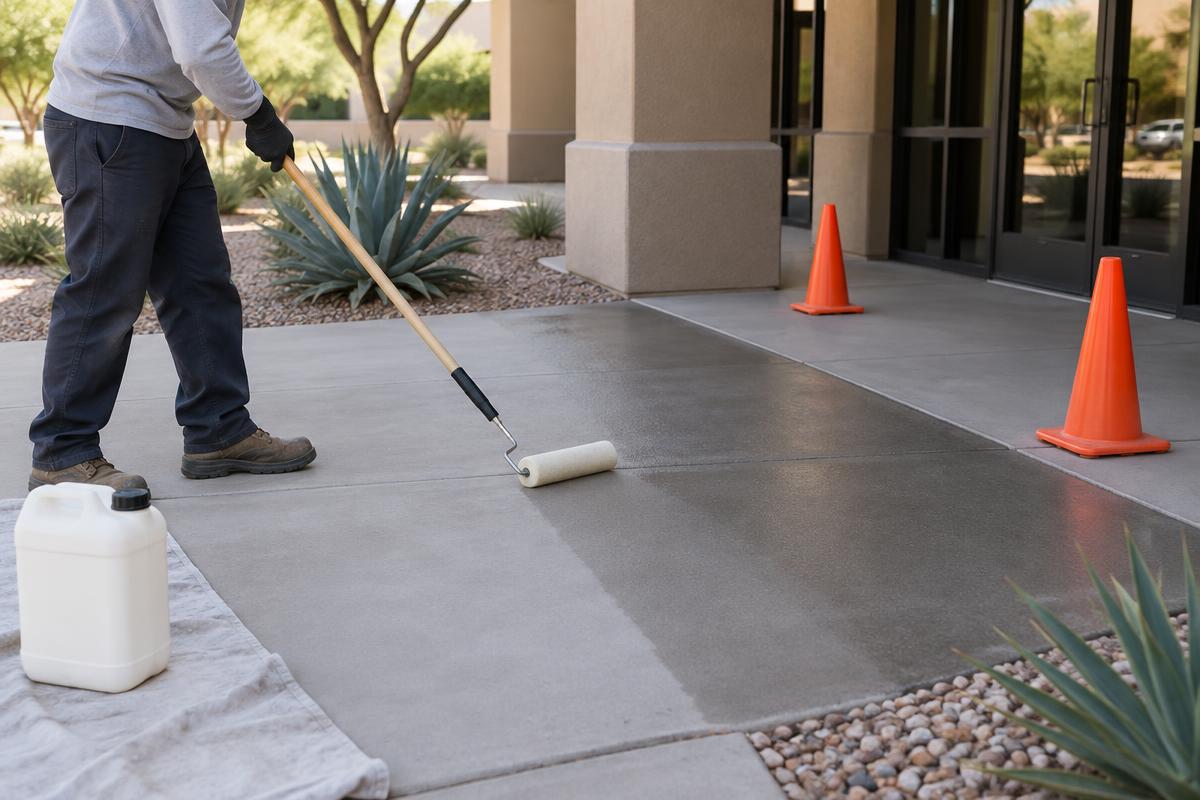
Preventing Future Stains With Concrete Sealing
Once the concrete is perfectly clean, sealing it provides a barrier that makes future cleaning faster and less expensive.
- Apply a penetrating silane-siloxane sealer to block water and oil absorption.
- Use topical acrylic sealers on decorative concrete to lock out sticky resins.
- Reapply sealers every two to three years depending on foot traffic volume.
- Clean up fresh gum spills quickly before they have time to bake into the sealer layer.
Commercial Sidewalk Cleaning Maintenance Intervals
| Property Type | Recommended Cleaning Frequency | Focus Areas |
|---|---|---|
| Restaurants and Cafes | Monthly to Quarterly | Patios, main entrances, dumpster pads |
| Retail Shopping Centers | Quarterly | Storefront walkways, seating areas, parking walkways |
| Office Buildings | Bi-annually | Main lobbies, employee break areas, smoking zones |
| Gas Stations | Monthly | Gas islands, ice machines, front doors |
| Apartment Complexes | Annually or Bi-annually | Leasing office entrance, pool decks, mailboxes |
Spot Cleaning vs. Full Surface Washing: How to Tell
- If the overall sidewalk is light colored but has a few fresh spots, targeted hot water extraction is sufficient.
- If removing a gum spot leaves a bright, clean circle, the entire walkway needs a full surface wash.
- If the walkway feels sticky or looks universally gray, atmospheric dirt requires a wide-area cleaning.
- If food spills or grease tracks surround the gum spots, chemical degreasing must accompany the hot water wash.
- If the concrete has a chalky appearance, it may require washing and a fresh coat of sealer.
What Drives the Cost of Commercial Gum Removal
Miracle Maintenance evaluates each commercial property individually to provide accurate pricing. These are the primary factors that determine the estimate.
- Total square footage of the walkways requiring cleaning.
- The density of the gum spots per square foot.
- Water access and the distance to the nearest acceptable water source.
- Working hour restrictions, such as requiring overnight or early morning service.
- The need for specialized wastewater recovery and filtration.
- The presence of oil, grease, or rust stains that require separate chemical treatments.
Questions to Ask Before You Hire a Cleaning Contractor
- Do you use a hot-water boiler system to remove gum, or just cold water?
- What temperature does your equipment reach at the nozzle?
- How do you manage the wastewater and gum debris?
- Do you clean the entire concrete panel to prevent ghosting or just the individual spots?
- Are you insured for commercial property damage and workers compensation?
- Will you schedule the cleaning outside of our peak business hours?
Frequently Asked Questions
How does hot water remove chewing gum from concrete?
Hot water melts the synthetic resins and polymers in the gum. Once the material softens, low-pressure water easily lifts it from the concrete pores without damaging the surface.
Will removing the gum leave a clean spot on my dirty sidewalk?
Yes, if only the gum is targeted. Professional crews will wash the entire concrete section or panel after removing the gum to ensure the sidewalk has a uniform, clean appearance.
Can cold water pressure washing remove gum?
Cold water cannot melt the gum. It relies on extremely high pressure to chip the hardened gum away, which frequently chips and etches the top layer of the concrete, causing permanent damage.
How long does a commercial sidewalk cleaning take?
The timeline depends heavily on the square footage and the severity of the staining. Most commercial properties can be serviced in a single night or early morning shift to avoid disrupting business.
Does concrete sealer stop gum from sticking?
Sealer does not completely stop gum from adhering, but it creates a protective barrier. The gum bonds to the sealer instead of the porous concrete, making future removal significantly faster and easier.
Hire a Property Maintenance Crew That Understands Concrete
Miracle Maintenance is a Scottsdale-based exterior cleaning company with over 25 years of experience in commercial property maintenance, hot-water pressure washing, graffiti removal, and concrete cleaning across Arizona.
If your storefront is covered in black gum spots, oil stains, or heavy dirt traffic, stop relying on cold water. Reach out for an honest assessment of what it takes to restore your concrete to a clean, professional standard.
Serving Phoenix, Scottsdale, Tempe, Mesa, Chandler, Gilbert, and surrounding commercial districts.




No Comments
Sorry, the comment form is closed at this time.