


Log Cabin Restaining in Arizona: When Is It Needed?
The Actual Timeline for Restaining an Arizona Log Home
The high-country sun destroys exterior wood finishes faster than almost any other climate. You cannot treat a log cabin like a traditional house. Waiting too long between coats leads to failed stain, exposed wood fiber, and the need for a costly full restoration.
Understanding the specific timeline for Log Cabin Restaining Arizona properties require prevents permanent damage. This guide covers the exact maintenance intervals, the warning signs of a failing finish, and how to decide between a simple maintenance wash and a complete media blast.
Written by the exterior surface team at Miracle Maintenance, a Scottsdale-based restoration company with more than 25 years of surface preparation experience.
You visit your property after a long winter and notice the south wall looks dry and chalky. The color is fading, and water no longer beads up on the logs. You see small cracks opening near the window frames, and the lower courses look weathered.
This guide explains what those symptoms mean, how often you actually need to apply new stain, and how to protect your wood from intense ultraviolet light before serious rot sets in.
In This Guide
- How often cabins need restaining
- Why the Arizona climate destroys wood
- Warning signs of a failing finish
- Maintenance coats vs. Full restorations
- Steps for proper staining
- The role of pigment in UV protection
- How to inspect your logs annually
- The true cost of delaying maintenance
- Frequently asked questions
Key Takeaways
- South and west walls usually require a maintenance coat every three to five years.
- Shaded north and east elevations can often last five to seven years before restaining.
- Gray logs indicate ultraviolet-damaged wood fiber that must be removed before applying new finish.
- Clear finishes without pigment offer poor protection against intense Arizona sunlight.
- Delaying routine maintenance forces a complete media blasting and log cabin restoration.
How Often Do You Need Log Cabin Restaining in Arizona?
Log homes do not age evenly. The timeline for restaining depends entirely on the direction the wall faces and the amount of weather it takes.
South and West Walls (3 to 5 Years)
These elevations take brutal afternoon sun. Ultraviolet rays break down the stain rapidly. You will always need to service these walls first.
North and East Walls (5 to 7 Years)
Shaded walls degrade slower. You often do not need to restain the entire cabin at the same time. These walls usually just need a gentle wash while the sun-facing walls get recoated.
Decks and Horizontal Surfaces (1 to 2 Years)
Rain and snow sit flat on decks, stairs, and railings. Standing water destroys the finish fast. These areas require frequent recoating to prevent rot.
Bare Wood After Stripping (Immediate)
Freshly blasted wood has no protection. You must apply a borate treatment and fresh stain within days of a full strip.
New Construction (Variable)
New logs hold high moisture and shrink over the first few years. They often require a fresh coat sooner as the wood settles and new checks open up.
Why the High-Country Climate Forces Frequent Maintenance
Log cabins in places like Flagstaff, Payson, and Show Low face an aggressive weather cycle. The high elevation means less atmosphere filters the ultraviolet light. These UV rays directly attack the wood structure.
Severe Ultraviolet Exposure
UV light breaks down lignin. Lignin is the cellular glue that holds wood fibers together. Once destroyed, the surface wood detaches, blows away, and exposes fresh wood to burn.
Wide Temperature Swings
Logs expand in the heat and contract in the freezing cold. This constant daily movement stresses and eventually cracks rigid surface finishes.
Monsoon Moisture
Heavy wind drives rain straight into cracks and upward-facing checks that opened up during the dry summer months.
Low Humidity
Dry air sucks moisture out of the logs. Without a proper finish seal, the wood becomes brittle and splits.
Signs You Need a Full Log Cabin Restoration Arizona
If you miss the maintenance window, adding another layer of stain will not fix the problem. You have to evaluate the current condition of the wood to decide if a full restoration is required.
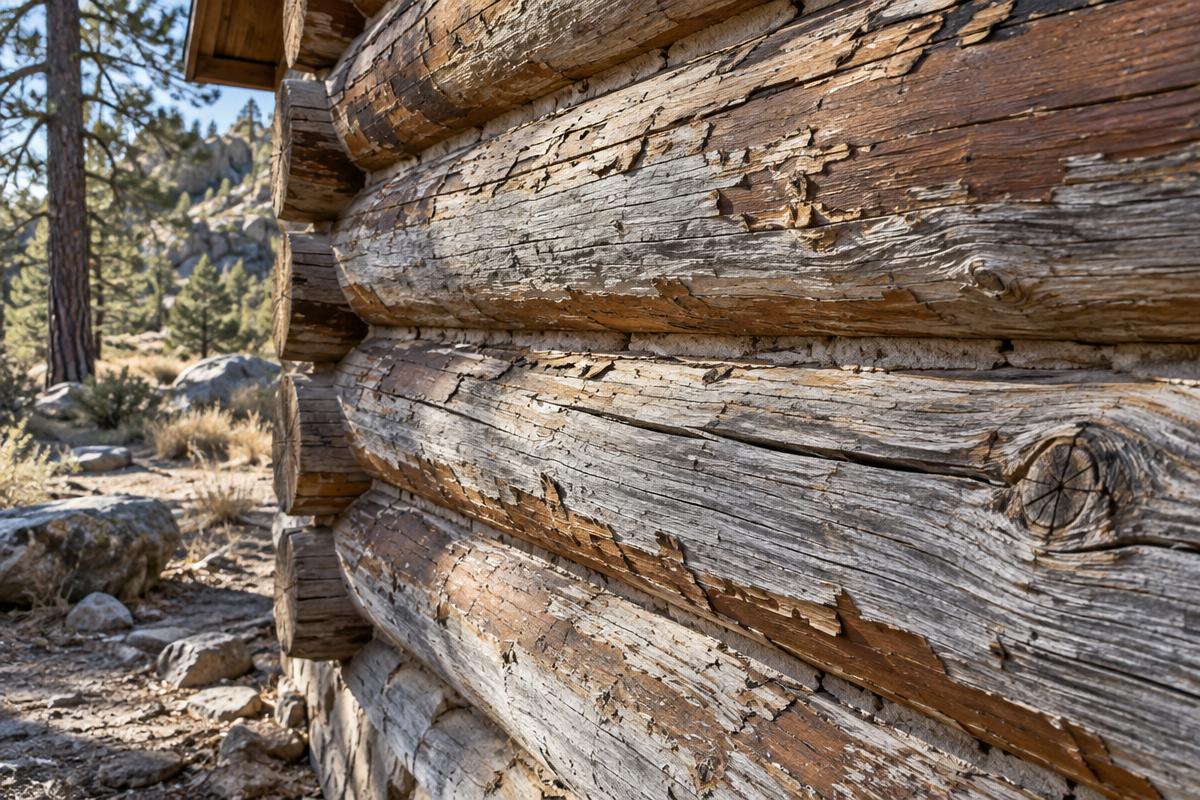
Gray Wood Surface
Gray wood is dead wood. The surface layer of cells has died from UV exposure. New stain cannot bond to dead fiber.
Peeling in Sheets
Moisture has worked its way behind a film-forming finish. The coating has lost adhesion and is physically lifting off the log.
Heavy Chalking
The existing stain wipes off on your hand like dust. The binder has failed completely.
Black Spotting
Mildew or mold is growing deep inside the wood pores on shaded walls.
Dark Soft Areas
Rot has set in near log ends, window trims, or deck ledger boards. This requires immediate repair before the structural integrity of the log is lost.
Maintenance Coat vs. Full Strip and Restain
| Factor | Maintenance Coat | Full Strip and Restain |
|---|---|---|
| Current Condition | Finish is intact but dull or faded. Wood is sound. | Finish is peeling, wood has turned gray. |
| The Process | Gentle wash, dry, and apply a fresh topcoat or stain. | Media blast, clean, apply borate, and completely restain. |
| Frequency | Every three to five years. | Every ten to fifteen years depending on upkeep. |
| Cost Drivers | Lower labor and material costs. | High labor, heavy equipment, blasting media, and cleanup. |
| Protection Level | Renews UV blockers and restores water repellency. | Resets the wood to a bare surface and builds a new coating system. |
Steps for Proper Log Cabin Staining Arizona
Applying stain requires strict preparation. Putting a high-quality product over dirty or wet logs guarantees early failure.
Gentle Wash
Remove dirt, pollen, and insect debris. Never use high-pressure washing on soft wood. High pressure destroys the grain and forces water deep into the cabin interior.
Moisture Testing
The logs must read below 18 percent moisture content before any stain goes on. Coating wet wood traps the moisture inside, leading to severe rot.
Seal the Checks
Apply specialized log caulk to upward-facing cracks. This stops monsoon rain from pooling inside the log structure.
Apply the Stain
Follow the manufacturer guidelines exactly. You must back-brush the stain. Spraying just puts droplets on the surface. A heavy brush creates mechanical friction, forcing the liquid deep into the micro-pores of the wood.
Apply the Clear Topcoat
Many modern finish systems require a pigmented base stain followed by a compatible clear protective topcoat. This two-part system provides the highest durability.
The Role of Pigment in Protecting Wood
Many owners want a clear finish to show off the natural pine or cedar color. Clear finishes provide almost zero ultraviolet protection. The sun will burn right through a clear coat and turn the wood gray underneath the sealer within months.
You must use a pigmented stain. The pigment particles physically block the UV rays from hitting the wood fiber. Darker stains typically hold more pigment and offer longer protection, but even a light pigment is vastly superior to a clear sealer. Always choose a product formulated specifically for exterior log homes.
How to Perform an Annual Log Inspection
Catching problems early prevents the need for media blasting. Walk around your cabin every spring and perform these checks.
- Check the south and west walls for fading color and dry, chalky wood.
- Look for new upward-facing checks that require fresh caulking.
- Inspect the bottom log courses for water splash back and snow damage.
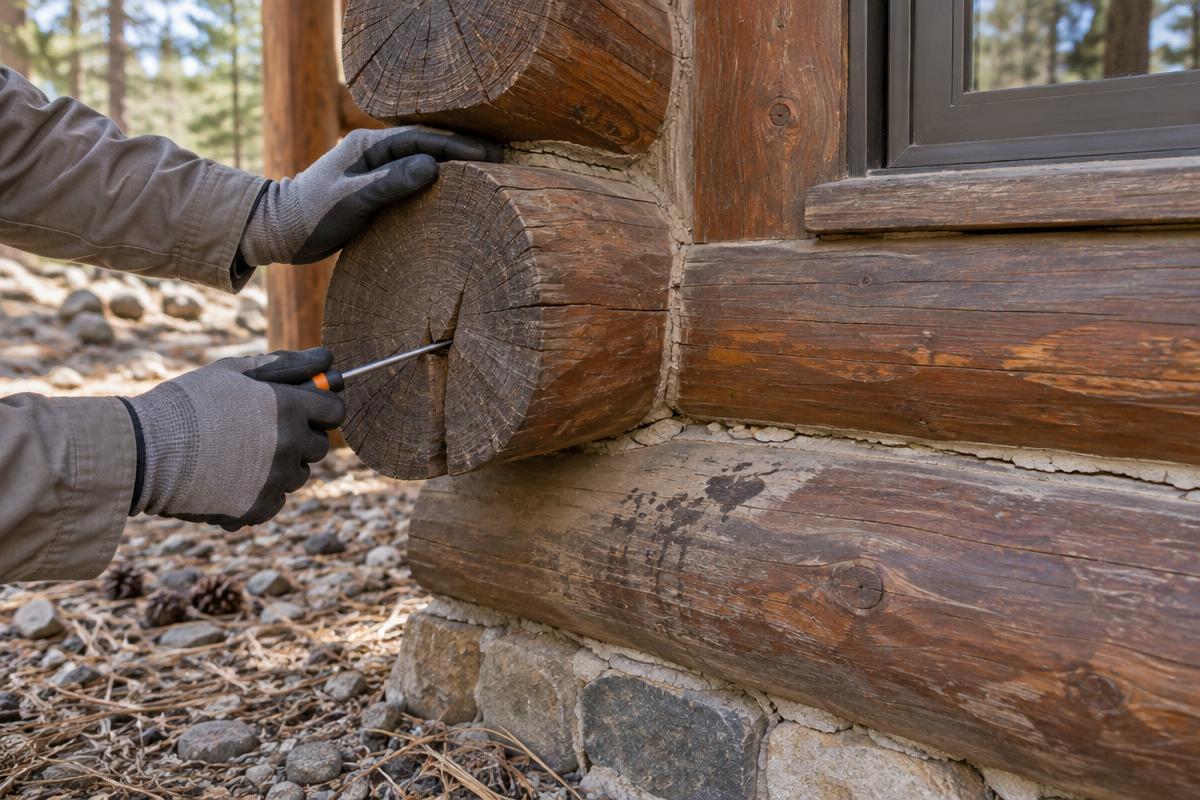
- Probe log ends and window sills for soft spots using a flathead screwdriver.
- Ensure gutters are clear and that all water drains away from the foundation and lower logs.
- Check sprinkler heads to ensure they do not spray directly onto the wood walls.
The True Cost of Delaying Maintenance
Delaying a simple maintenance coat turns a manageable weekend project into a massive expense.
- Expensive Blasting: Removing failed stain requires corn cob or crushed glass blasting. This process demands heavy diesel compressors, staging, and extensive site cleanup.
- Rot Repair: Water entering unsealed checks rots the log from the inside out. Splicing or replacing a structural log costs thousands of dollars.
- Pest Infestations: Bare, wet wood invites termites, carpenter ants, and wood-boring beetles.
- Lost Property Value: A gray, peeling exterior drastically lowers the appraisal and curb appeal of the property. Buyers avoid log homes with neglected exteriors.
Frequently Asked Questions
How do I know if my log stain is failing?
Water stops beading on the surface. The color looks washed out, the finish feels dry and chalky to the touch, and you start to see bare wood fiber exposed on the sun-facing walls.
Can I just paint or stain over gray logs?
No. Gray wood is dead fiber. Paint or stain will peel off rapidly because it cannot anchor to sound wood. You must blast or sand the gray fiber off to expose healthy wood first.
Should I use a power washer to clean my cabin?
High pressure destroys soft wood grain and drives water deep into the cabin interior through the log joints. A gentle wash with a proper wood cleaner and a garden hose is the correct method.
Does a clear sealer work in Arizona?
No. Clear sealers lack the pigment needed to block severe ultraviolet light. They fail quickly in direct sun and leave the wood fully exposed to UV damage.
How long does restaining take?
A maintenance wash and recoat usually takes a few days. A full media blasting restoration requires heavy equipment and can take one to two weeks depending on the size of the cabin and the amount of rot repair needed.
Talk to an Experienced Arizona Restoration Crew
Miracle Maintenance is a Scottsdale-based surface restoration company with more than 25 years of Arizona experience in media blasting, log cabin restoration, sandblasting, steam cleaning, and industrial surface preparation.
If your cabin finish is fading, peeling, or turning gray, you need an honest evaluation. We can tell you whether your property needs a simple maintenance coat or a full strip and refinish. Send us photos and describe what you are seeing.
Serving properties throughout Arizona for specialized log cabin restoration work on request.




No Comments
Sorry, the comment form is closed at this time.