


Removing Rust and Old Coatings From Metal: When to Use Media Blasting in Arizona
Metal & Tank Media Blasting in Phoenix: Rust and Coating Removal Guide
Rust and failed industrial coatings do not stop until the underlying metal is clean. Sanding over pitting leaves oxidation behind, and grinding merely polishes the steel. A proper surface preparation removes heavy rust, strips failed epoxies, and creates an exact anchor profile so the new coating can bond permanently.
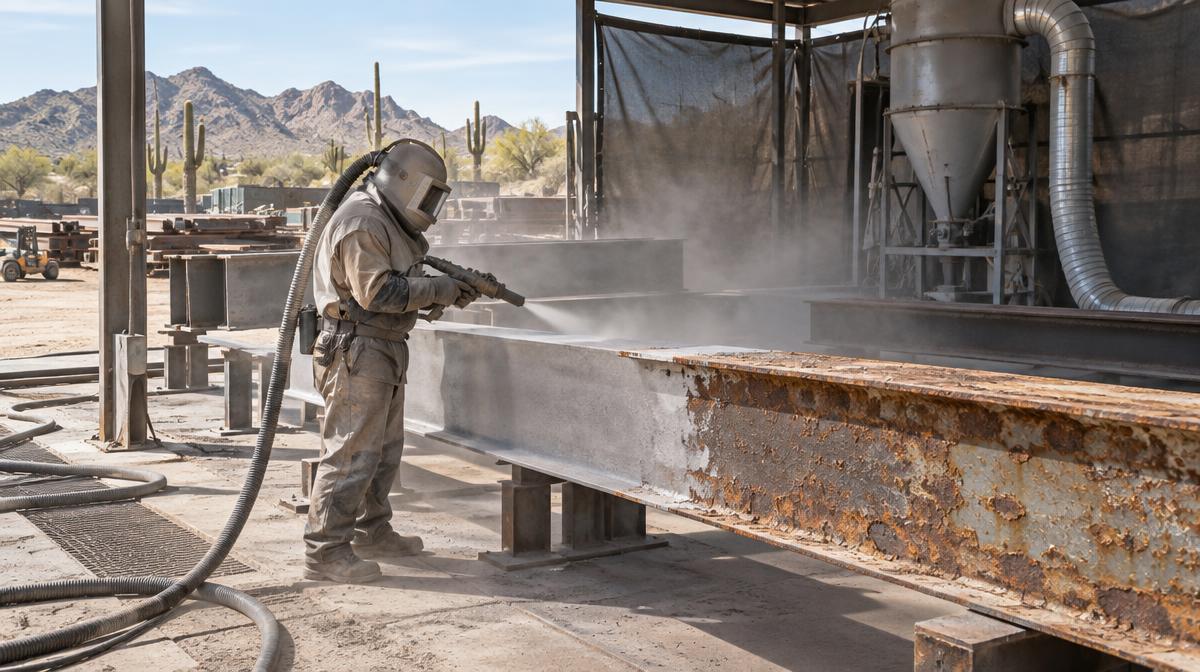
This guide explains how metal blasting Phoenix projects work, which abrasives belong on which gauge of steel, how to avoid warping thin panels, and what determines a commercial blast versus a white metal finish.
Written by the industrial surface preparation team at Miracle Maintenance, a Scottsdale-based blasting company with more than 25 years of Arizona surface restoration experience.
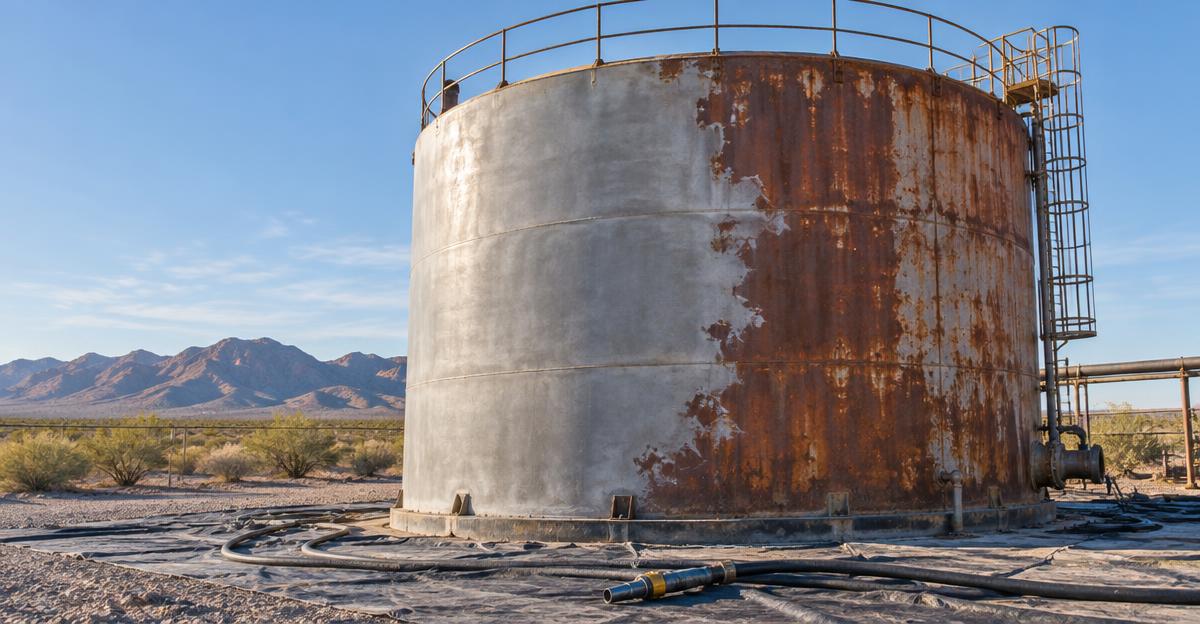
You inspect a storage tank or structural beam and see heavy flaking. The protective paint is lifting off in sheets, exposing deep red oxidation underneath. Grinding it by hand will take days and leave a polished surface that rejects new primer.
This guide details what those failure signs mean, when abrasive stripping is the required solution, and exactly how the metal must be handled after the blast to prevent flash rust.
In This Guide
- What rust and peeling finish are telling you
- Why Arizona metal coatings fail differently
- The full metal restoration sequence
- Media blasting metal explained
- How common abrasives compare
- Why blasting beats surface grinding
- Blasting mistakes that warp metal
- Flash rust and immediate priming
- Pitting and heavy oxidation
- Tanks and industrial enclosures
- Choosing primers and coatings
- Metal preparation grades
- When to grind vs. Blast
- What drives surface preparation cost
- Questions to ask before hiring
- Frequently asked questions
Key Takeaways
- Media blasting metal removes rust deep inside pitting, unlike surface grinding.
- Abrasive blasting creates an anchor pattern, a microscopic texture required for industrial coatings to adhere.
- The choice of media prevents panel warping. Soda or fine glass works for thin sheet metal, while crushed glass or slag tackles heavy structural steel.
- Bare steel begins to flash rust immediately. Priming must happen the same day.
- Clear finishes and unpigmented primers offer poor UV protection against Arizona sun.
What Rust and Failing Paint Are Actually Telling You
Metal fails in predictable stages. Rust occurs because iron naturally wants to return to its original unrefined state (iron oxide) when exposed to oxygen and moisture. Once a coating is compromised, the oxidation process spreads laterally under the paint.
Peeling tells you the bond has failed. A hard industrial finish sat on the surface, moisture worked in through a scratch or unsealed edge, and the rust pushed the coating upward. Any new coating applied over that weak layer will fail rapidly.
Surface Rust
Light oxidation with no metal loss. Often easily removed with a brush-off blast.
Pitting and Scaling
Advanced corrosion that eats into the steel. Requires aggressive blasting to clean the cavities.
Chalking and Fading
The paint binder is degrading from UV exposure, but the metal underneath may still be sound.
Alligatoring
The paint looks cracked like reptile skin. Usually caused by applying a hard topcoat over a soft primer.
Blistering
Trapped moisture or solvent is pushing up from beneath the coating film.
Why Arizona Metal and Tanks Fail Differently
Industrial coating advice written for coastal climates focuses primarily on salt spray. Arizona structural metal and storage tanks deal with massive thermal expansion and intense ultraviolet radiation.
Severe UV Exposure
Direct sun breaks down paint binders rapidly, causing industrial enamels to turn chalky and thin out.
Thermal Expansion
Steel gets incredibly hot in the Phoenix sun and cools sharply at night. Rigid coatings crack under this constant movement.
Monsoon Moisture
Sudden, heavy rains drive water into those newly opened micro-cracks.
Trapped Humidity
Moisture inside unventilated metal tanks creates heavy condensation, rusting the interior walls.
Windblown Sand
High winds act as nature’s sandpaper, wearing down leading edges on exposed structures.
The Full Metal Restoration Sequence, Step by Step
A complete commercial metal preparation service follows a strict protocol. Missing a step results in premature coating failure.
Inspection and Testing
Test for lead paint, measure steel thickness, and determine the necessary blast grade.
Site Containment
Erect barriers to capture dust, hazardous coatings, and spent abrasive.
Degreasing
Remove oil and grease before blasting so they are not driven into the steel profile.
Media Blasting
Strip the failed finish, remove oxidation, and create the specified anchor pattern.
Blow-Off and Clean
Remove all dust and spent media from the surface using clean, dry compressed air.
Profile Measurement
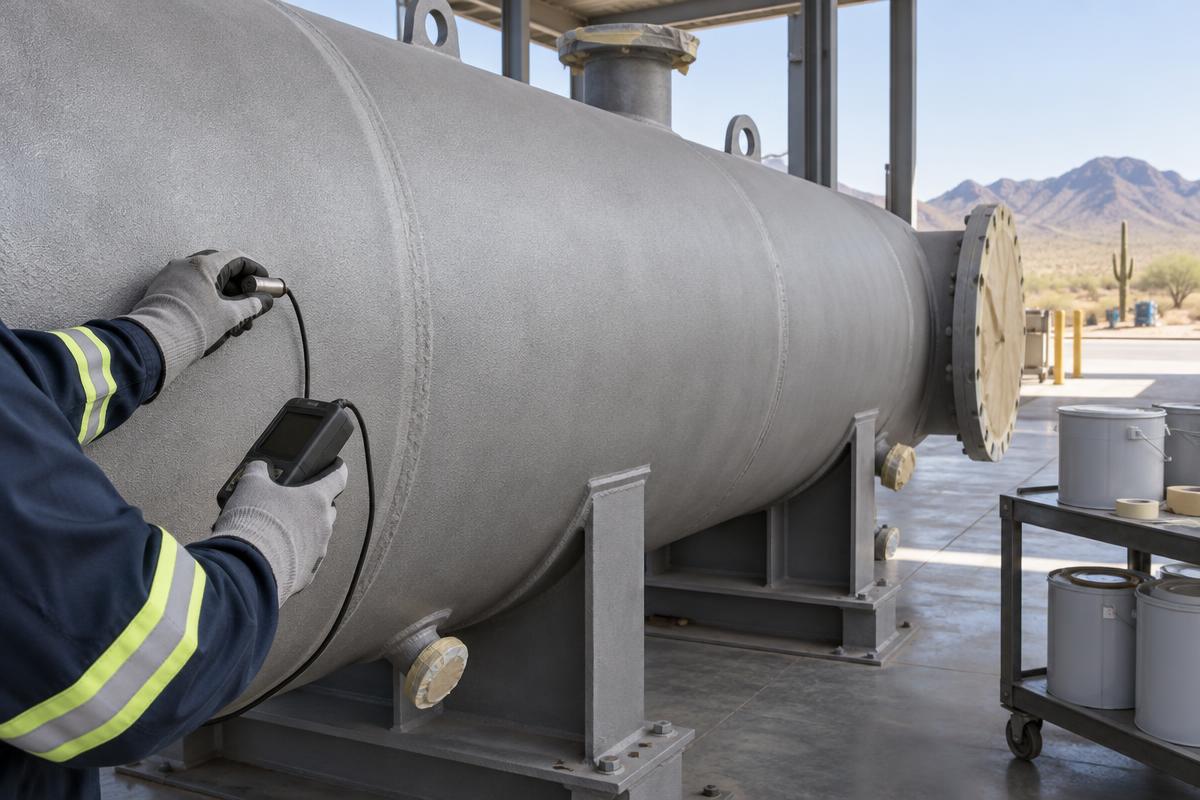
Verify the depth of the anchor pattern using surface profile gauges.
Priming
Apply a rust-inhibitive primer immediately before flash rust can form.
Topcoat Application
Apply the final industrial coating to achieve the total required dry film thickness.
Final Inspection
Verify coating adhesion and uniform coverage.
Media Blasting Metal Explained
Media blasting metal uses high-volume compressed air to drive an abrasive material against a hard surface. The impact fractures the old coating and knocks away oxidized iron, leaving bare, clean steel.
This process does two critical things simultaneously. It removes the contamination, and it etches a microscopic texture into the surface. Paint manufacturers call this an anchor pattern. Without that pattern, heavy industrial epoxies have nothing to grip and will eventually peel.
For more details on specific methods, review our general sandblasting services and our soda blasting options for delicate components.
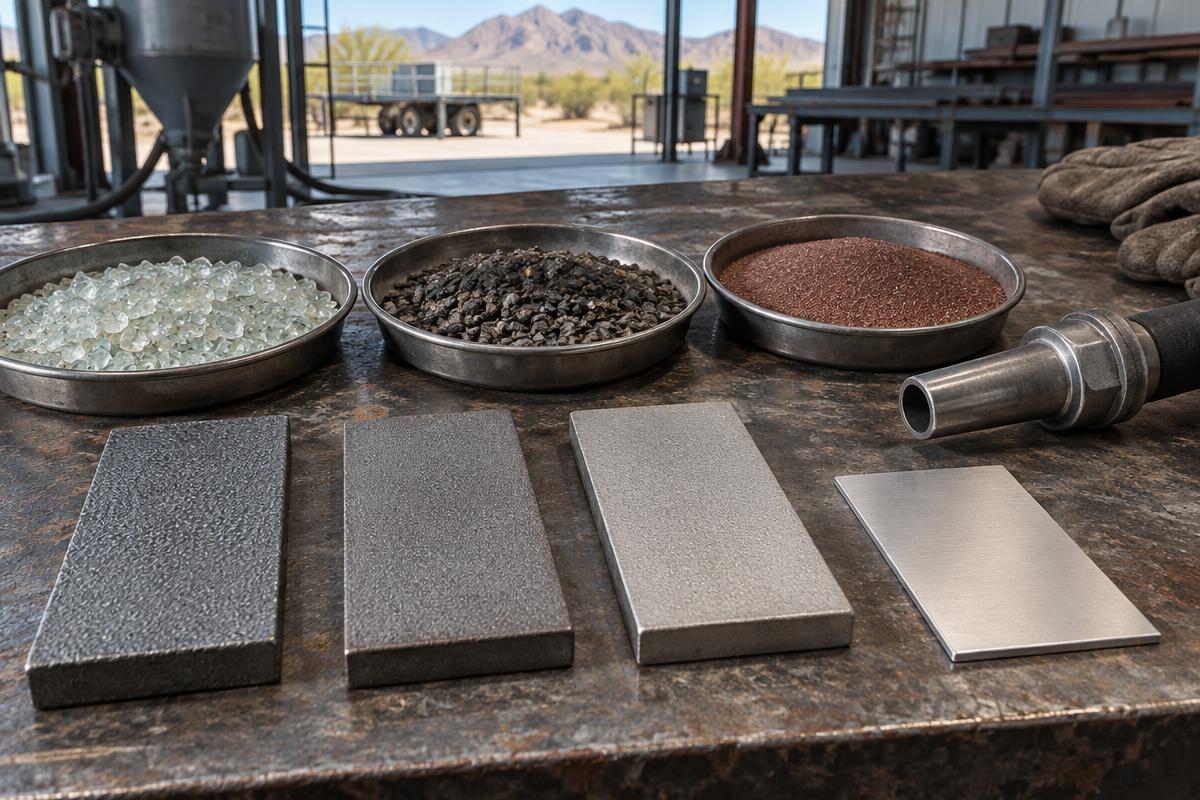
How Common Media Compare on Steel and Aluminum
| Media | Aggressiveness on Metal | Anchor Profile Created | Cleanup | Typical Use on Metal |
|---|---|---|---|---|
| Crushed Glass | Moderate to high | Excellent, angular profile (1.5 to 3 mils) | Angular dust, requires containment | Standard structural steel and tanks |
| Coal or Copper Slag | Very high | Deep, sharp profile (up to 4+ mils) | Heavy, dark dust, full containment | Heavy rust, thick industrial epoxies |
| Aluminum Oxide | High, very hard | Deep, consistent etching | Often recycled in blast rooms | Parts preparation and powder coat stripping |
| Sodium Bicarbonate | Very gentle | None (leaves surface smooth) | Water soluble, must be neutralized | Engine parts, thin aluminum, grease removal |
| Walnut Shell | Gentle | Minimal to none | Organic, moderate dust | Delicate automotive panels, brass, copper |
Why Blasting Beats Grinding and Chemical Stripping
- Cleans inside pitting rather than just polishing the top surface the way a grinder does.
- Reaches bolt heads, welds, and corners that are impossible to sand effectively by hand.
- Creates a uniform anchor pattern across the entire structure for even paint adhesion.
- Strips large tanks efficiently when manual scraping would take weeks.
- Leaves no wax or solvent residue that chemical strippers often leave behind.
Blasting Mistakes That Damage Metal
Warping Thin Panels
Friction creates heat. High pressure and aggressive media on sheet metal will stretch and warp the panel permanently.
Creating Too Deep of a Profile
If the anchor profile is 4 mils deep, but the primer coat is only 2 mils thick, the peaks of the metal will stick through the paint and rust immediately.
Blasting Over Grease
If oil or grease is not removed prior to blasting, the abrasive drives the contaminant deep into the new metal profile.
Wet Compressed Air
Compressors generate condensation. Without proper air dryers, the system sprays moisture directly onto bare steel, causing instant rust.
Ignoring Flash Rust Windows
Leaving a freshly blasted steel tank unprimed overnight in humid conditions guarantees you will have to blast it again the next morning.
Using Unwashed Media
Cheap abrasives can contain chlorides (salts). Blasting with salty media ensures rapid coating failure.
What Happens Right After the Blast
Freshly stripped steel is highly reactive. Without a protective coating, oxygen and ambient moisture immediately attack the metal. This rapid oxidation is called flash rust.
Once the blasting stops, the surface must be blown down with clean, dry air to remove microscopic dust particles. The crew then verifies the anchor profile depth. Finally, the first coat of primer must be applied on the same day.
Pitting, Lead Paint, and Heavy Oxidation
Blasting exposes the structural reality of the metal. What looks like surface rust often hides deeper issues once the old paint is stripped away.
Deep Pitting
Heavy rust leaves craters in the steel. Abrasive blasting is the only way to scour the rust out of these depressions.
Lead-Based Paint
Older industrial structures often contain lead. This requires full containment, negative air pressure, and specialized disposal protocols.
Mill Scale
New hot-rolled steel has a bluish crust called mill scale. It must be blasted off, or it will eventually flake off and take the new paint with it.
Weld Flux
Slag and splatter around weld seams must be blasted clean so paint can adhere to the joint.
Thinning Steel
If severe corrosion has eaten away significant metal thickness, structural engineers may need to evaluate the piece before coating.
Handling hazardous coatings correctly is a strict requirement. The EPA outlines detailed regulations regarding lead paint removal and containment.
Preparing Tanks and Industrial Enclosures
Storage tanks present specific challenges. Exterior coatings must survive extreme Arizona UV, while interior linings often face constant immersion in water or chemicals.
- Interior blasting requires confined space entry protocols, including forced air ventilation and specialized respirators.
- Lighting must be explosion-proof when working inside dark enclosures with dust in the air.
- Dehumidification equipment is often necessary to hold the blast and prevent flash rust inside a tank.
- Tank linings require white metal (SP-5) preparation to ensure the coating achieves maximum chemical bond.
Both interior and exterior tank work requires specialized staging and highly trained operators.
Choosing Primer and Industrial Coatings
Media blasting does the heavy lifting, but the primer and topcoat determine how long the metal survives.
Zinc-Rich Primers
Provide cathodic protection. The zinc sacrifices itself to protect the steel if the topcoat is scratched.
Epoxy Coatings
Incredibly durable and chemical resistant, but they chalk quickly under direct UV exposure.
Polyurethanes
Provide excellent UV protection and color retention. Often used as a topcoat over an epoxy primer.
Direct-to-Metal (DTM) Acrylics
Used in light commercial applications where extreme chemical resistance is not required.
Always verify coating specifications with the product manufacturer before applying a new system over blasted steel.
- Ensure the primer thickness exceeds the anchor profile depth.
- Do not apply epoxies to metal that is overheated by direct sun.
- Stripe-coat all welds, edges, and bolt heads by brush before spraying.
- Observe all recoat windows strictly.
- Do not mix incompatible solvent bases.
Metal Preparation Grades (SSPC and NACE Standards)
| Standard | Description | What Remains on Surface |
|---|---|---|
| SSPC-SP 5 (White Metal) | Highest level of cleaning. | Zero visible rust, paint, or mill scale. Uniform gray-white color. Used for immersion tanks. |
| SSPC-SP 10 (Near-White) | High-performance commercial standard. | 95% clean. Slight shadows or streaks allowed on 5% of surface. Standard for structural steel. |
| SSPC-SP 6 (Commercial) | Thorough cleaning. | 66% clean. Shadows and tight stains allowed on 33%. Good for general industrial use. |
| SSPC-SP 7 (Brush-Off) | Light, fast sweeping blast. | Loose rust and peeling paint removed. Tightly adhered old paint remains. Used for maintenance coats. |
| SSPC-SP 3 (Power Tool) | Grinding and wire wheeling. | Removes loose material but leaves tight rust. Does not create an anchor profile. |
Grind or Blast: How to Tell
- If you are repairing a two-inch scratch, a grinder or wire wheel is usually sufficient.
- If the metal is deeply pitted, blasting is required to clean the craters.
- If you are coating a large structure with industrial epoxy, blasting is required to create an anchor profile.
- If there are complex angles, welds, and bolt heads, blasting is the only way to reach all surfaces.
- If the existing paint is thick powder coating, abrasive blasting will save days of manual labor.
What Drives the Cost of Metal Blasting Phoenix AZ Projects
Miracle Maintenance prices each job based on specific site conditions. These are the factors that determine the estimate.
- Total square footage of the tank, structure, or metal components.
- Access requirements, including boom lifts, scaffolding, and staging areas.
- The required surface preparation grade (a white metal blast takes much longer than a brush-off blast).
- Containment needs for lead-based paint or hazardous industrial coatings.
- The type and thickness of the existing failure (powder coating is much harder to remove than standard enamel).
- Environmental protection and clean-up requirements for spent abrasive.
- Mobilization distance from our core service area.
Questions to Ask Before You Hire
- What blast grade (e.g., SSPC-SP 6, SP-10) will you achieve?
- What abrasive will you use, and will it warp my sheet metal panels?
- How do you handle containment and cleanup of the spent abrasive?
- Do you measure the anchor profile before applying primer?
- Will the primer be applied the same day to prevent flash rust?
- Do you have experience stripping this specific type of industrial coating?
- Can you handle confined space entry if the inside of my tank needs blasting?
Frequently Asked Questions
Will sandblasting warp metal panels?
Yes, if done incorrectly. High pressure and aggressive media generate friction and heat, which will stretch and warp thin sheet metal. Specialized operators use low pressure and fine abrasives like soda or crushed glass on thin panels.
What is flash rust?
Flash rust is the rapid oxidation that occurs on bare steel when exposed to oxygen and humidity. It can form within hours. Bare metal must be primed quickly to seal out moisture.
How long do I have to prime after blasting?
You should prime the same day the metal is blasted, ideally within 4 to 8 hours. If the steel is left unprotected overnight, microscopic rust will form, and the surface will require re-blasting.
Does media blasting remove powder coating?
Yes, but powder coating is essentially baked-on plastic. It is highly resistant to impact. Removing it requires aggressive media, correct pressures, and experienced operators. Chemical strippers combined with blasting are sometimes used for stubborn sections.
Can I just grind the rust off instead?
For tiny touch-ups, yes. For structural steel, no. Grinding polishes the metal smooth, leaving no texture for the paint to grip. It also fails to remove rust from deep pits, meaning corrosion will return quickly under the new paint.
Talk to a Crew That Blasts Industrial Metal Every Week
Miracle Maintenance is a Scottsdale-based surface preparation company with more than 25 years of Arizona experience in sandblasting, soda blasting, media blasting, and industrial coating removal. We prepare tanks, structural steel, fleet vehicles, and architectural metal.
If your storage tank is failing, your heavy equipment is rusting, or you need structural steel stripped to bare white metal, send us photos and describe your specific requirements.
Serving Scottsdale, Phoenix, Tempe, Mesa, Chandler, Gilbert, and surrounding Arizona communities for commercial surface preparation.



No Comments
Sorry, the comment form is closed at this time.