

Parking Garage Cleaning in Phoenix, AZ: Methods & Maintenance
Phoenix heat bakes motor oil, transmission fluid, and tire rubber directly into concrete. Cold water pressure washing only moves the surface dirt around. A proper commercial parking garage cleaning requires hot water, specialized degreasers, and environmental wash water recovery.
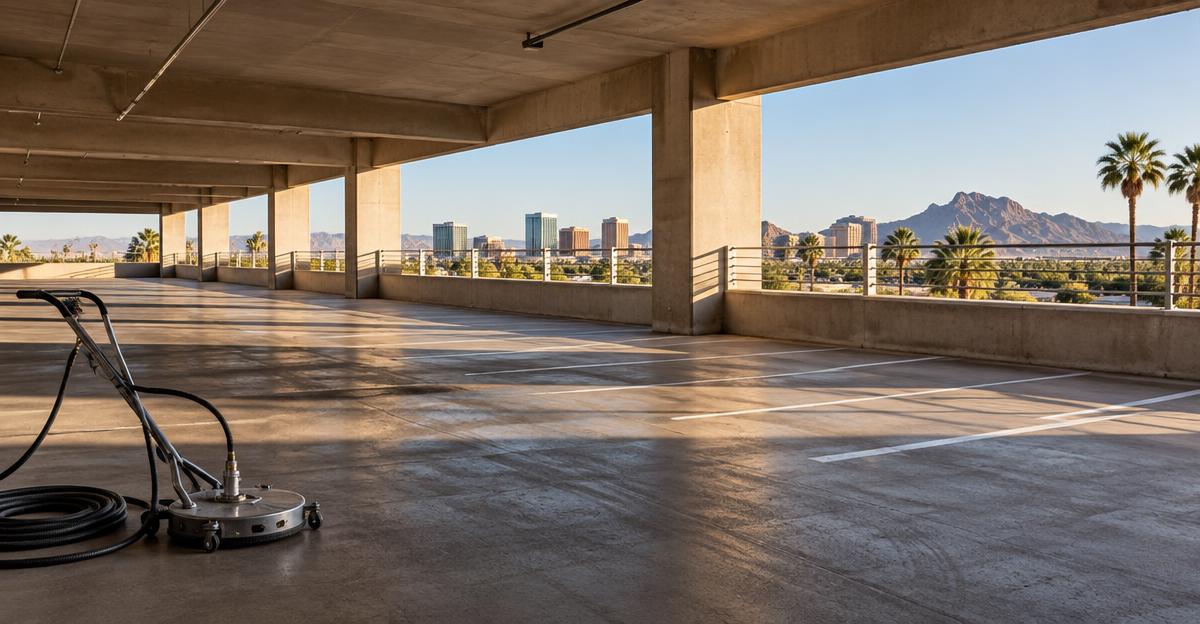
This guide explains how to properly execute the parking garage cleaning Phoenix AZ property managers require. You will learn how to remove heavy concrete buildup, which stains require specific treatments, and how to set a maintenance schedule that prevents long-term concrete damage.
Written by the commercial maintenance team at Miracle Maintenance, a Scottsdale-based pressure washing company with more than 25 years of Arizona surface cleaning experience.
You drive through a commercial garage and notice the lower levels are black with tire tracking. Oil spots fill every parking stall. The elevator lobbies smell like old grease, and dust coats the wheel stops.
This guide covers exactly how to fix these conditions. It breaks down the commercial parking garage cleaning process, the difference between hot and cold water washing, and how to stay compliant with local environmental regulations.
In This Guide
- Why Phoenix garages need special care
- The full cleaning sequence
- Hot vs. Cold water washing
- Dealing with specific concrete stains
- Environmental compliance rules
- Recommended maintenance schedules
- What drives the cost of cleaning
- Questions to ask before hiring
- Frequently asked questions
Key Takeaways
- Phoenix heat turns minor oil drips into permanent stains if left untreated.
- Hot water pressure washing is non-negotiable for removing baked-on grease and tire marks.
- The EPA strictly prohibits wash water runoff from entering storm drains.
- Commercial parking garage cleaning requires vacuum recovery systems to capture contaminated water.
- Quarterly maintenance washing costs less over time than waiting for a severe buildup.
Why Phoenix Parking Garages Need Special Care
Arizona garages face environmental factors that accelerate concrete staining. Standard maintenance advice written for temperate climates fails here.
Severe Heat Baking
Summer temperatures bake oil and vehicle fluids deep into porous concrete, making them harder to lift.
Tire Rubber Transfer
Hot asphalt tires deposit heavy black tracking marks onto the cooler concrete of the garage entrance.
Extreme Dust Loading
Desert dust settles continuously. When combined with minor moisture, it turns into a fine mud that sticks to the surface.
Lack of Rinsing Rain
Enclosed and subterranean levels never get natural rain washing, allowing pollutants to accumulate for months.
Low Humidity
Dry air causes oil spots to crust over, requiring longer chemical dwell times to break down.
The Full Commercial Parking Garage Cleaning Sequence
A complete parking garage cleaning Phoenix AZ service follows a strict order. Skipping steps drives dirt back into the concrete.
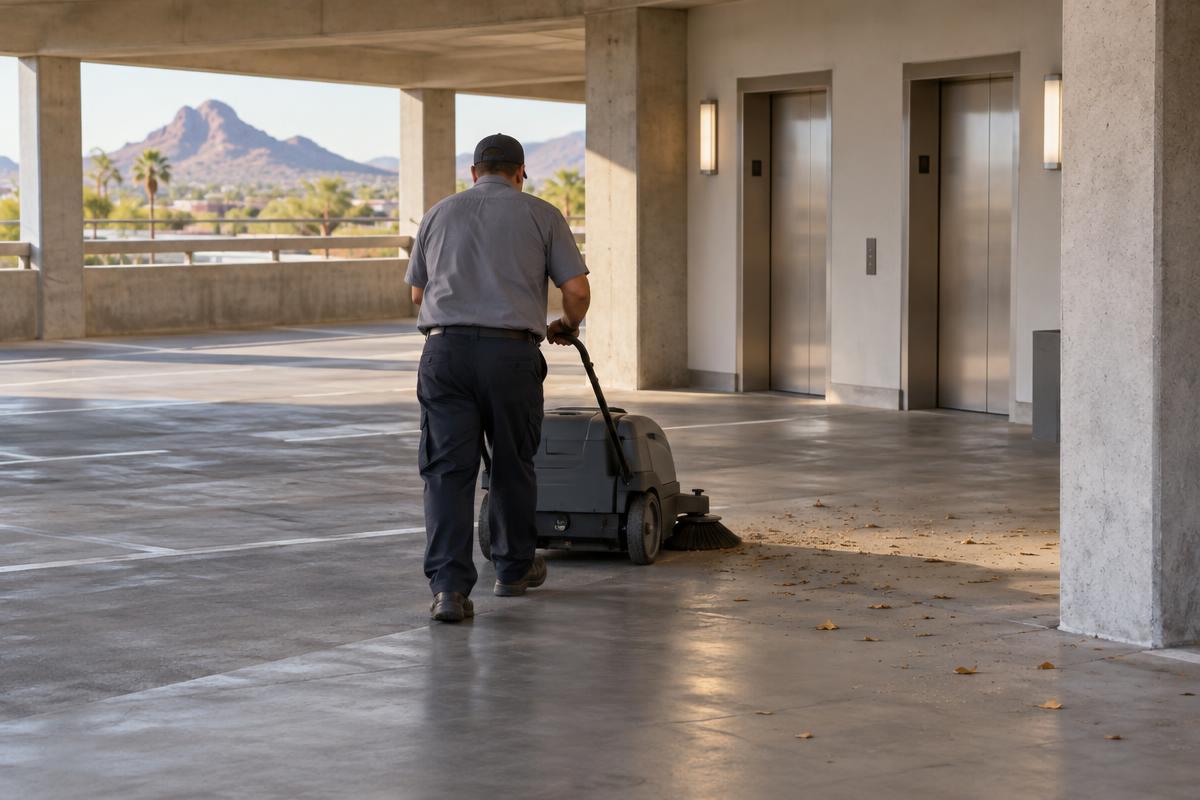
Dry Sweeping and Debris Removal
Remove all loose trash, gravel, and heavy dust before introducing water. Wetting heavy debris creates thick mud.
Degreasing and Spot Treatment
Apply commercial-grade alkaline degreasers to oil spots, tire marks, and heavy traffic lanes. Allow dwell time for the chemicals to break the hydrocarbon bonds.
Hot Water Surface Cleaning
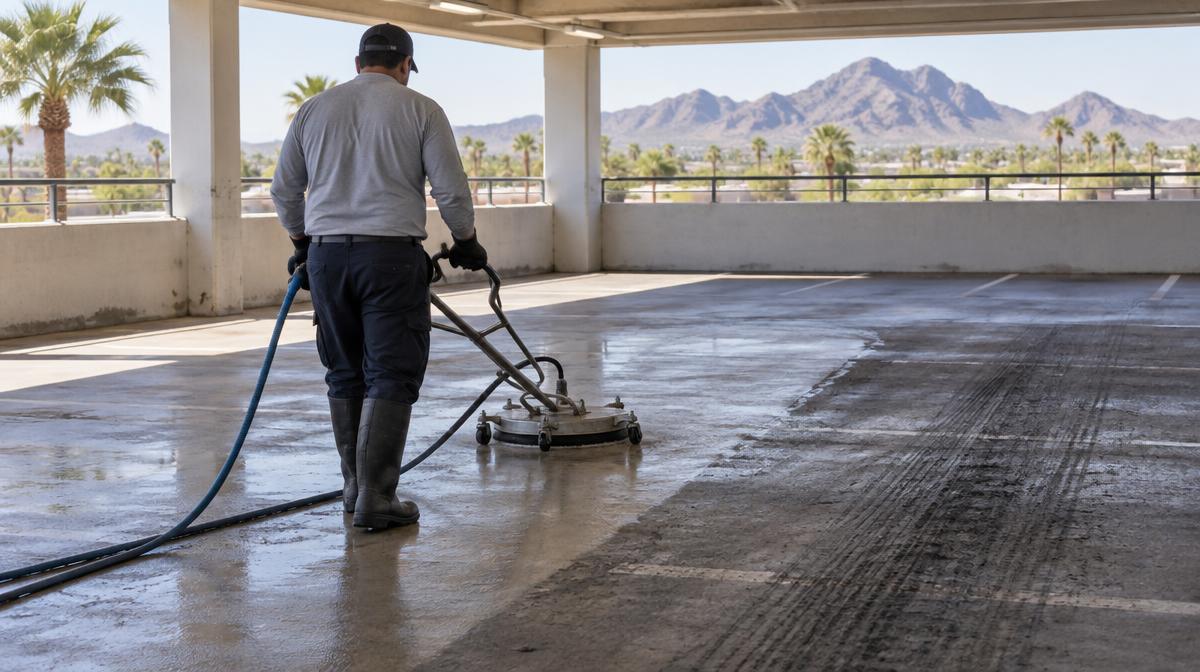
Use rotary surface cleaners running at 200 degrees Fahrenheit. The spinning nozzles clean an even path without the tiger-striping caused by hand wands.
Rinsing and Water Recovery
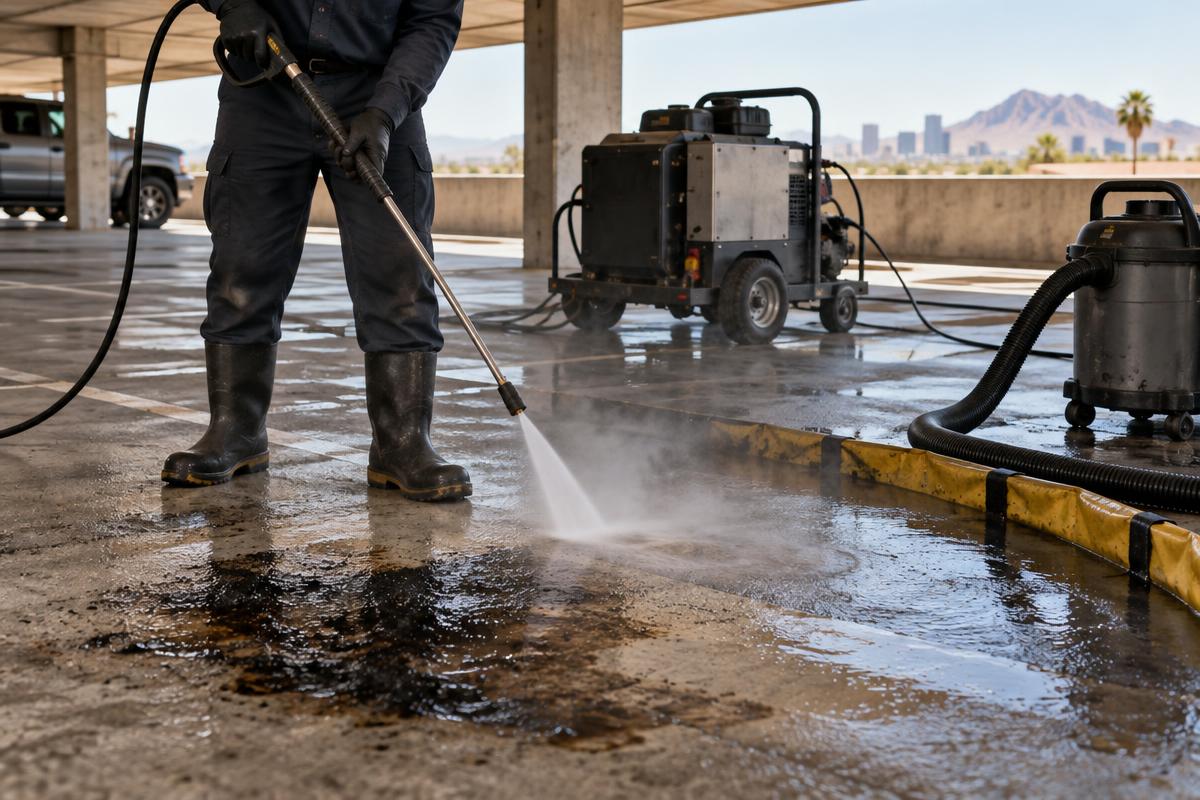
Flush the suspended dirt to a central collection point. Use a vacuum recovery system to pump the contaminated water into holding tanks.
Wall and Pillar Detailing
Wash the lower sections of structural pillars and walls where dirt splashes up from vehicle tires.
Final Inspection
Walk the property to ensure all standing water is removed and drains are clear.
Hot Water vs. Cold Water Pressure Washing
Using cold water on an oily garage floor is like washing greasy dishes in a cold sink. It does not work. You need a parking garage pressure washing Phoenix crew equipped with specialized water heaters.
The core principles of proper concrete cleaning rely on heat to emulsify fats. Without it, you are wasting money on superficial results.
How Hot and Cold Water Compare on Concrete
| Method | Oil Removal | Tire Marks | Speed | Best Application |
|---|---|---|---|---|
| Hot Water (200 degrees) | Melts and lifts heavy grease | Softens rubber for easy removal | Fast and efficient | Primary commercial parking garage cleaning method |
| Cold Water | Leaves grease behind | Requires excessive pressure that damages concrete | Slow and requires manual scrubbing | Light dust removal or sweeping alternative |
Dealing With Specific Concrete Stains
Different stains require different chemical treatments. Using the wrong product wastes time and leaves a shadow on the concrete.
- Motor Oil and Grease requires strong alkaline degreasers and hot water to emulsify the fat.
- Tire Tracking demands citrus-based solvents or specific rubber removers to dissolve the polymer bonds.
- Rust Stains are caused by leaking radiators or exposed rebar. These require acidic rust removers to reverse the oxidation.
- Calcium Efflorescence is a white chalky buildup from water seeping through the concrete slab. It needs mild acids and proper drainage repair to prevent recurrence.
- Chewing Gum requires targeted hot water or steam to melt the gum off the surface without carving the concrete.
Environmental Compliance and Wash Water Recovery
Phoenix environmental codes prohibit discharging cleaning water into storm drains. Garage wash water contains heavy metals, motor oil, transmission fluid, and strong detergents.
Block the Drains
Cover all storm drains and scuppers before starting the job to prevent accidental runoff.
Set Up Berms
Use physical barriers to direct wash water away from exits and toward collection pools.
Deploy Vacuum Units
Use specialized recovery systems to suck up the contaminated water as you clean.
Filter and Transport
Pump the recovered water into holding tanks for transport to an approved treatment facility.
Verify Sanitary Sewer Rules
Never wash grease down the sanitary sewer without explicit local utility approval and an interceptor.
Recommended Maintenance Cleaning Schedules
Consistent maintenance prevents pollutants from eating away at the concrete sealants over time.
| Task | Typical Interval | What It Achieves |
|---|---|---|
| Mechanical Sweeping | Weekly | Removes loose trash and prevents dust accumulation |
| Spot Cleaning Leaks | Monthly | Prevents fresh oil from baking into the concrete slab |
| Elevator Lobby Washing | Monthly | Keeps high-pedestrian zones clean and odor-free |
| High-Traffic Lane Washing | Quarterly | Removes heavy tire tracking at entry and exit ramps |
| Full Structural Wash | Annually | Deep cleans every parking stall and wall to reset the baseline |
What Drives the Cost of Parking Garage Cleaning
Miracle Maintenance evaluates several factors when bidding a commercial garage. Prices typically range from 5 to 15 cents per square foot, depending heavily on these conditions.
- Total square footage and the number of parking levels.
- Water source availability. Bringing water trucks costs more than using on-site hydrants.
- The severity of oil staining and rubber tracking.
- The distance to drains and the complexity of the water recovery setup.
- After-hours or weekend scheduling requirements to avoid traffic disruption.
- Ceiling heights and clearance limits for service vehicles.
Questions to Ask Before You Hire
- Do you use hot water or cold water for concrete cleaning?
- How do you capture and dispose of the contaminated wash water?
- Do your trucks meet the height clearance for my parking structures?
- What chemicals do you use on heavy oil spots?
- Are you insured for environmental liability?
- How many square feet can you clean per shift?
Frequently Asked Questions
Can you remove oil stains from concrete completely?
Hot water and degreasers can remove 90 to 95 percent of an oil stain. If the oil has sat for years in the Phoenix sun, a faint shadow usually remains permanently etched into the porous concrete.
Why is cold water pressure washing bad for garages?
Cold water does not break down oil or grease. It simply pushes the oily water to a new location, leaving a slippery residue behind that creates a liability for pedestrians.
How long does a parking structure take to dry?
In the Arizona climate, an open-air concrete deck dries in 30 to 60 minutes. Lower, enclosed levels might take two to four hours depending on the internal ventilation.
Do cars need to be removed before cleaning?
Yes. A garage must be completely empty or closed off in sections. Washing around parked cars leaves dirty squares and risks damaging customer vehicles with splashing chemicals.
Is sweeping enough for routine maintenance?
Sweeping removes dry debris and trash, but it does nothing to remove oil, fluids, or tire tracking. A combination of weekly sweeping and quarterly washing provides the best structural protection.
Hire a Fleet Built for Commercial Property Maintenance
Miracle Maintenance is a Scottsdale-based surface restoration company with more than 25 years of Arizona experience. We provide commercial parking garage cleaning, warehouse sweeping, building washing, graffiti removal, and industrial surface preparation.
If your garage has heavy tire marks, deep oil stains, or strong odors, you need a crew equipped with hot water and water recovery systems. Send us your location details and square footage to get started.
Serving property managers in Scottsdale, Phoenix, Tempe, Mesa, Chandler, Gilbert, and surrounding Arizona communities.



No Comments
Sorry, the comment form is closed at this time.