


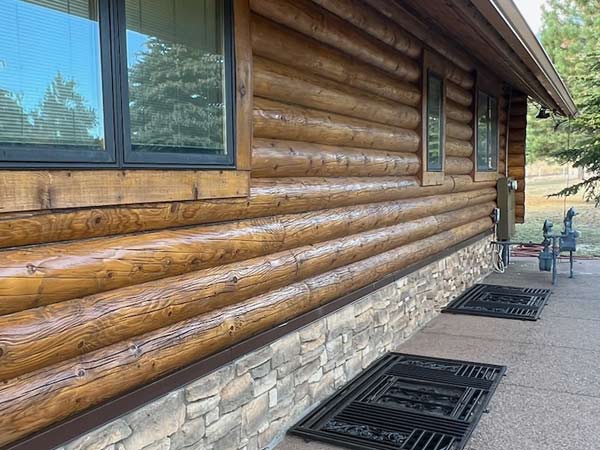
Log Cabin Restoration Arizona: Media Blasting & Sealing 2026
Log Cabin Restoration in Arizona: Media Blasting, Sealing, and What a Full Restoration Actually Involves
Gray logs are not dirt. They are ultraviolet-damaged wood fiber, and washing alone will not bring them back. A proper restoration removes failed finish and dead surface fiber, repairs damage, treats bare wood, restores joints, and finishes the cabin with a coating system built to survive Arizona sun.
This 2026 guide explains how media blasting works on log walls, which abrasives belong on wood, what happens after blasting, and what determines whether a cabin needs a maintenance coat or a full strip and refinish.
Written by the surface restoration team at Miracle Maintenance, a Scottsdale-based blasting and restoration company with more than 25 years of Arizona surface preparation experience.
You walk up to the cabin after a season away and the wood has gone silver gray on the south and west walls. The finish that looked fine two years ago is peeling around window trim, black spotting has appeared on the shaded side, and long checks are opening across several logs.
This guide explains what those symptoms mean, when blasting is the right answer, and what has to happen after the strip for the restoration to last.
In This Guide
- What gray logs and peeling finish are telling you
- Why Arizona high-country cabins fail differently
- The full restoration sequence
- Media blasting on wood
- How common media compare
- Blasting mistakes that damage logs
- Rot, insects, and borate treatment
- Chinking, stain, and topcoat
- Maintenance intervals
- What drives restoration cost
- Questions to ask before hiring
- Frequently asked questions
Key Takeaways
- Gray logs are UV-damaged wood fiber, not just dirt.
- Media blasting is the practical way to strip a whole cabin because it follows the round log profile and reaches checks and notches that sanding cannot.
- The media matters more than the machine. Corn cob, crushed glass, soda, and walnut behave very differently on soft wood.
- Blasting is only one step. Borate treatment, rot repair, chinking, stain, and topcoat are what make the result last.
- Clear finish with no pigment offers poor UV protection in Arizona sun.
What Gray Logs and Peeling Finish Are Actually Telling You
Wood turns gray because ultraviolet light breaks down lignin, the natural binder that holds wood fibers together. Once the surface lignin degrades, wind and rain carry away the loose fibers and leave a soft silvered layer behind. Any new coating applied over that weak layer is bonding to wood that is already failing.
Peeling tells a different story. A film-forming finish sat on the surface, moisture worked in behind it from a check or end-grain cut, and the coating lifted. That usually happens unevenly, which is why one wall can still look good while another is shedding finish.
Silver or Gray With No Finish Left
The surface layer is degraded and needs to be removed.
Finish Intact but Dull and Chalky
Often a candidate for a maintenance coat instead of a full strip.
Black Spotting on Shaded Walls
Often mildew rather than rot and usually removable during cleaning.
Dark Soft Areas
Log ends, window areas, and deck connections should be probed for decay.
Upward-Facing Checks
These trap water and become primary entry points for decay.
Why Arizona High-Country Cabins Fail Differently
Log-home advice written for wetter climates assumes constant moisture. Arizona cabins deal with the opposite pattern most of the year, then experience short periods of intense rain, snow, and temperature swing.
Severe UV Exposure
South and west walls age much faster than shaded elevations.
Wide Temperature Swings
Logs expand and contract, opening checks and stressing rigid finish films.
Monsoon Rain
Wind-driven water enters checks and joints that opened during the dry months.
Snow and Splash Back
Lower courses take repeated moisture exposure around decks and ground-level areas.
Low Humidity
Dry air helps reduce decay but is hard on finish flexibility over time.
The Full Restoration Sequence, Step by Step
A complete log cabin restoration service follows a fixed order because each step depends on the previous one.
Inspection and Moisture Readings
Identify rot, insect activity, failed joints, and the existing finish system.
Site Protection
Cover windows, roofing, decks, landscaping, and mechanical equipment.
Media Blasting
Strip the failed finish and degraded gray fiber back to sound wood.
Cleanup and Surface Brushing
Remove spent media and dust, knock down raised fiber, and even the grain.
Rot and Repair
Remove decayed material, patch or replace damaged sections, and correct the water source.
Borate Treatment
Apply a preservative while the bare wood can still absorb it.
Chinking and Caulk
Remove failed joints, install backing, and reseal the cabin correctly.
Stain
Apply the pigmented coats specified by the finish manufacturer.
Topcoat
Add the clear protective coat when the finish system requires one.
Final Walkthrough
Document the condition and establish future inspection and maintenance intervals.
Media Blasting on Wood Explained
Log-home media blasting uses compressed air to drive a relatively soft abrasive against the wood. The goal is to remove failed coating and dead gray fiber while keeping the sound wood beneath intact.
The same core blasting principles apply here as on steel or masonry, but the tolerance is much smaller. Media type, nozzle pressure, and stand-off distance determine whether the operator strips the surface cleanly or damages the grain.
For broader technical comparisons, review our abrasive blasting work and soda blasting service.
How Common Media Compare on Logs
| Media | Aggressiveness on Wood | Effect on Grain | Cleanup | Typical Use on Logs |
|---|---|---|---|---|
| Corn cob | Gentle to moderate | Follows grain, leaves a soft even texture | Biodegradable, rakes and vacuums up | Default for whole-cabin stripping |
| Crushed glass | Moderate to aggressive | Cuts faster, can raise fiber if pressure is high | Angular dust, needs containment | Heavy film finishes and stubborn coatings |
| Sodium bicarbonate | Very gentle | Almost no profile change | Water soluble, must be rinsed and neutralized | Delicate interior logs and light soil |
| Walnut shell | Gentle to moderate | Soft cut, warm finish color | Organic, moderate dust | Interior work and detail areas |
| Silica sand | Aggressive | Gouges and carves soft spring wood | Health hazard, not appropriate | Not used on log walls |
Why Blasting Beats Sanding and Chemical Stripping
- Follows the round log profile instead of flattening high spots the way sanding can.
- Reaches checks, notches, and undersides that are difficult to sand by hand.
- Leaves no chemical stripper residue that has to be neutralized before finishing.
- Covers large wall areas efficiently when the whole exterior needs restoration.
- Creates a consistent open surface so stain absorption is more even.
Blasting Mistakes That Damage Logs
Too Much Pressure
Wood is soft. Pressure that works on steel can carve a log.
Wrong Media
Aggressive angular abrasive removes soft spring grain and leaves a washboard texture.
Nozzle Too Close
Holding the stream too close or too long in one place can dish the surface.
Blasting Into Open Checks
Media can be driven deep into upward-facing checks where it remains trapped.
Ignoring Raised Fiber
Unbrushed surface fiber makes the first finish coat rough and inconsistent.
Leaving Bare Wood Too Long
Freshly stripped logs begin weathering immediately and should not sit exposed for weeks.
What Happens Right After the Blasting
Freshly stripped logs are open, absorbent, and unprotected. Before finish goes on, the spent media and dust must be removed from the wall, window ledges, log courses, and surrounding site.
The surface is then brushed or lightly buffed to lay down raised fiber. Moisture readings follow so the crew can confirm the wood is dry enough to accept the finish system.
Rot, Insects, and Borate Treatment
Blasting exposes the real condition of the logs. Areas that looked like discoloration often reveal soft wood once the failed surface is removed.
Log Ends
Especially vulnerable where roof overhangs are short and rain reaches the end grain.
Lowest Courses
Snow, splash back, and accumulated moisture often affect the bottom one or two rows first.
Windows and Doors
Sills and thresholds are common moisture-entry points.
Deck Connections
Ledger boards, railings, and stair stringers can trap water where they meet logs.
Upward-Facing Checks
These can hold water for years and hide deeper decay.
Bare wood is the moment when borate preservative can penetrate most effectively. The EPA overview of wood preservative chemicals explains how these preservative classes are regulated.
Chinking and Caulk
On chinked cabins, the joint often does not survive a full restoration intact. Chinking that has pulled loose, cracked, or been painted over should be removed rather than coated around.
- Use backer rod or bond-breaker tape so the chinking bonds to two surfaces rather than three.
- Keep the joint wider than it is deep so it can flex as the logs move.
- Work on clean, dry, dust-free wood so adhesion is reliable.
- Use caulk for smaller trim and butt joints rather than forcing one product into every gap.
The NAHB Log and Timber Homes Council also publishes owner-oriented information on log-home construction and upkeep.
Staining and Sealing an Arizona Log Home
Blasting gets the visual credit, but the finish system decides how long the restoration lasts.
Pigment Is Protection
Clear finishes provide minimal UV protection. Pigmented systems protect the wood more effectively in Arizona sun.
Penetrating Stains
Soak into the wood and wear gradually rather than peeling as a surface film.
Film-Forming Finishes
Create a richer surface layer but can peel if moisture works behind them.
Topcoat Systems
Some manufacturers pair pigmented stain with a clear protective topcoat for added water and abrasion resistance.
The USDA Forest Products Laboratory has published extensive research on exterior wood weathering and the role pigment plays in extending finish life.
- Follow the manufacturer’s recoat window.
- Do not apply finish to a wall that is overheated by direct sun.
- Back-brush sprayed material into the grain.
- Treat log ends and end grain as separate high-absorption areas.
- Do not mix incompatible stain and topcoat systems.
Log Home Maintenance Intervals
| Task | Typical Interval | What You Are Looking For |
|---|---|---|
| Gentle exterior wash | Annually | Pollen, dust, mildew, insect debris |
| Walk-around inspection | Annually, after monsoon | New checks, failed caulk, soft spots, finish wear |
| Caulk and chink touch-up | As found, usually every two to three years | Gaps at trim, window returns, and butt joints |
| Maintenance coat of stain | Every three to five years, sooner on south and west walls | Chalking, fading, water no longer beading |
| Full strip and refinish | Every eight to fifteen years depending on exposure and upkeep | Graying through the finish, widespread peeling |
Strip or Maintenance Coat: How to Tell
- If water still beads and the color is only faded, a maintenance coat is usually enough.
- If the finish chalks but the wood is sound, a wash and recoat may still work.
- If the wood has gone gray through the finish, the dead fiber needs to be removed.
- If the finish is peeling in sheets, spot repair is unlikely to hold and a full strip is usually the honest answer.
- If the existing product cannot be identified, treat the wall as a strip candidate.
What Drives the Cost of a Log Cabin Restoration
Miracle Maintenance does not publish a flat number because cabins vary too much. These are the conditions that move the estimate.
- Total wall area, including footprint, wall height, and number of stories.
- Access, including steep lots, tree lines, upper gables, and staging limitations.
- The existing finish and how difficult it is to remove.
- Rot repair discovered after stripping.
- Linear footage of chinking that has to be removed and replaced.
- The finish system and the number of coats required.
- Travel and lodging when the property is far from the crew’s base.
Questions to Ask Before You Hire
- Which media will you use on my logs, and why that one?
- What pressure do you run on wood, and will you show me a test patch first?
- How will you contain and clean up the spent media?
- Will you take moisture readings before finishing?
- What finish system are you proposing, and are the stain and topcoat from the same manufacturer?
- Who handles rot repair if it is discovered?
- What maintenance schedule should I expect after the restoration?
Frequently Asked Questions
What is media blasting on a log home?
It uses compressed air to drive a soft abrasive such as corn cob or carefully selected crushed glass against the logs, removing failed finish and ultraviolet-damaged surface fiber without flattening the log profile.
Will blasting damage my logs?
Correctly done, it should not. Damage usually comes from the wrong media, excessive pressure, or poor nozzle control. A test patch on an inconspicuous area should be part of the process.
Can I pressure wash my cabin instead?
Pressure washing can remove dirt and mildew, but it does not remove failed film finish or degraded gray fiber. Excessive water pressure can also drive moisture deeper into checks and joints.
How long can stripped logs sit before staining?
As short a period as scheduling allows. Bare wood starts weathering immediately, and finish manufacturers usually want the wood coated within days rather than weeks once moisture content is acceptable.
Is corn cob blasting the same as sandblasting?
The equipment is similar, but the media is completely different. Corn cob is a soft organic abrasive chosen for wood. Silica sand is much more aggressive and is not appropriate for log walls.
Do I really need a clear topcoat over the stain?
It depends on the finish system. Some penetrating stains stand alone, while others are designed to receive a compatible clear topcoat. Follow the manufacturer’s system rather than mixing products.
How often should an Arizona cabin be refinished?
Plan on maintenance coats every three to five years, with south and west walls often needing attention first. A full strip and refinish is more often an eight-to-fifteen-year project when the cabin is maintained properly.
Talk to a Crew That Blasts Every Week
Miracle Maintenance is a Scottsdale-based surface restoration company with more than 25 years of Arizona experience in soda blasting, sandblasting, media blasting, steam cleaning, pressure washing, graffiti removal, pool tile calcium removal, log cabin restoration, and industrial surface preparation.
If your cabin has gone gray, the finish is peeling, or you simply want an honest read on whether it needs a full strip or a maintenance coat, send photos and describe what you are seeing.
Serving Scottsdale, Phoenix, Tempe, Mesa, Chandler, Gilbert, and surrounding Arizona communities for cabin work on request.




No Comments
Sorry, the comment form is closed at this time.