


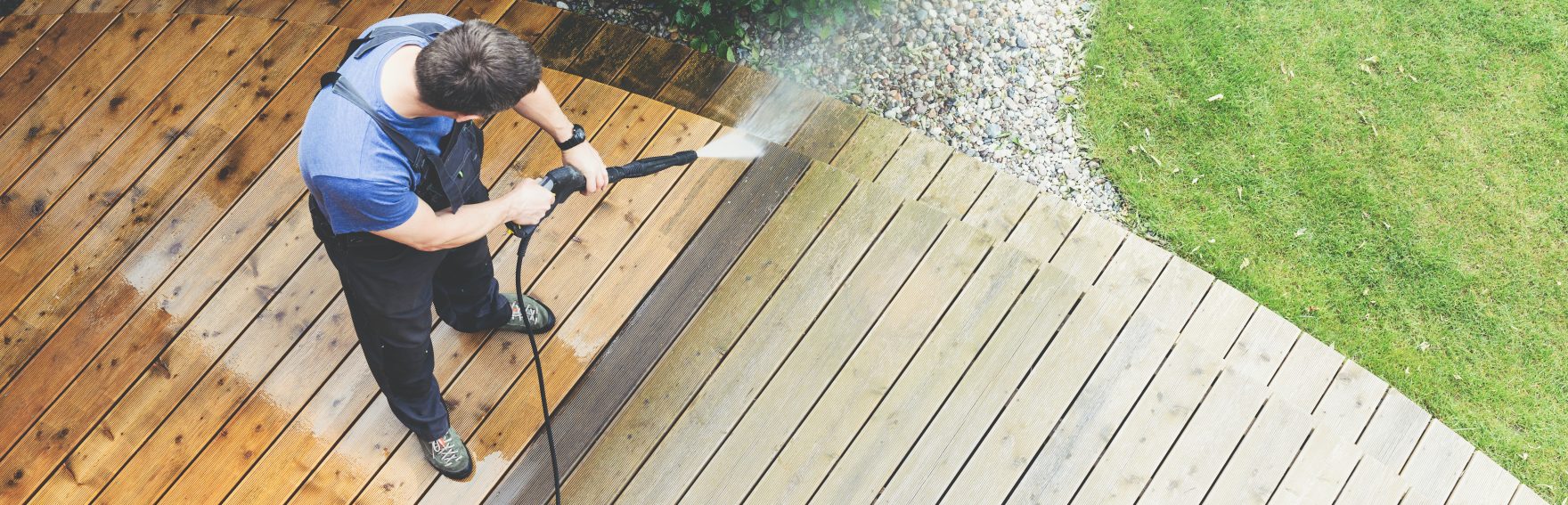
Steam Cleaning vs. Pressure Washing: Which You Need
Steam Cleaning vs. Pressure Washing: Which Method Does Your Property Need?
If you own a restaurant, manage a warehouse, or maintain a stucco home in Phoenix, someone has probably told you to “just pressure wash it.” Sometimes that is the right call. Sometimes steam cleaning, soft washing, or hot water pressure washing is the better choice.
In This Guide
- Steam cleaning vs. pressure washing at a glance
- What pressure washing actually is
- What steam cleaning actually is
- When hot water pressure washing is the better option
- Best method by job type
- Surface safety for Arizona properties
- Cost, time, and water use
- Commercial and industrial applications
- FAQs and hiring guidance
Pressure washing and steam cleaning look similar from ten feet away. They are very different tools. Choosing the wrong one costs money at best and causes damage at worst. Here is the practical breakdown we give clients across Scottsdale, Phoenix, Tempe, Mesa, Chandler, and Gilbert.
The short version: pressure washing uses volume and force. Steam cleaning uses heat. When the problem is bonded to the surface with grease or biology, heat wins. When the problem is embedded dirt on a hard, durable surface, pressure wins.
Miracle Maintenance provides pressure washing, hot water pressure washing, steam cleaning, media blasting, sandblasting, graffiti removal, and full surface preparation services across the Valley.
Quick Answer: The Difference in One Table
| Factor | Pressure Washing | Steam Cleaning |
|---|---|---|
| Water temp | Ambient to ~200°F | 250–300°F vapor |
| Pressure | 1,500–40,000 PSI | Typically under 150 PSI |
| Water use | 4–8 GPM | 0.5–1.5 GPM |
| Best for | Concrete, driveways, sidewalks, heavy staining | Grease, sanitization, delicate surfaces, historic masonry |
| Avoid on | Soft stucco, wood siding, old mortar, painted surfaces at full PSI | Extremely large flat surfaces where speed matters more than heat |
| Chemicals needed | Often — detergents or degreasers for organic staining | Rarely — heat sanitizes without chemicals |
What Pressure Washing Actually Is
A pressure washer takes municipal water, pushes it through a pump, and forces it out of a nozzle at anywhere from 1,500 to 4,000 PSI for residential machines, up to 40,000 PSI for industrial hydroblasting. Flow rates run 4 to 8 gallons per minute. The cleaning power is a product of both pressure and volume, not pressure alone.
Where Pressure Washing Shines
- Concrete driveways, sidewalks, and parking lots with a rotating surface cleaner.
- Removing oxidation, dirt, and light staining from durable surfaces.
- Prepping concrete for sealing or coating.
- Large flat areas where speed and coverage matter.
Where Pressure Washing Causes Problems
- Arizona stucco, where high PSI can drive water behind the paint film.
- Wood siding and fences, where it can splinter or gouge the surface.
- Old brick or lime mortar, where pressure can erode the joints.
- Painted surfaces and roof shingles, where it can strip coatings or void warranties.
What Steam Cleaning Actually Is
True industrial steam cleaning uses water heated to 250–300°F and delivered as low-pressure vapor — usually under 150 PSI. The cleaning power comes from thermal energy, not force. Heat breaks the bond between contaminant and surface, and the low pressure means the surface itself is not being hammered.
Melts Grease and Oil
Anything with a fat, wax, or petroleum base gives up at temperature. That is why steam is so effective for kitchen equipment, grease traps, and restaurant cleaning.
Sanitizes Without Heavy Chemical Use
Vapor at 250°F kills bacteria, mold, and most pathogens on contact without leaving chemical residue behind.
Cleans Without Erosion
Historic brick, soft stone, food-processing equipment, and delicate substrates can be cleaned without the physical damage high PSI can cause.
The Third Option Most People Miss: Hot Water Pressure Washing
Between the two extremes sits hot water pressure washing — water heated to 180–200°F and delivered at 2,500–4,000 PSI. It combines heat and force. For fleet vehicles, heavy equipment, industrial floors, oil-stained concrete, and graffiti, it is often the correct answer.
For painted walls, exterior stains, and commercial cleaning needs, Miracle Maintenance can pair hot water washing with painting and staining, graffiti removal, or surface preparation services depending on the project.
Head-to-Head by Job Type
| Job | Best Method | Why |
|---|---|---|
| Restaurant kitchen hoods & grease traps | Steam | Heat liquefies grease and sanitizes without residue. |
| Concrete driveways & sidewalks | Pressure washing | High PSI plus a surface cleaner lifts embedded dirt fast. |
| Chewing gum on sidewalks | Steam | Melts gum off without gouging concrete. |
| Graffiti removal | Depends — often hot water pressure washing | Heat plus chemistry breaks paint bond; steam is better for delicate substrates. |
| Mold, mildew, algae on siding | Soft wash | Low pressure plus solution kills the biology instead of just moving it around. |
| Historic brick & mortar | Steam | Cleans without eroding lime mortar. |
| Food-processing equipment | Steam | Sanitizes to food-grade standards with no chemical residue. |
| Fleet trucks & heavy equipment | Hot water pressure washing | Cuts road grease, diesel soot, and clay. |
| Arizona stucco homes | Soft wash or steam | High PSI can drive water into the wall assembly. |
| Pool decks & travertine | Low-pressure hot water | Cleans without pitting soft stone. |
Sanitization: Why Steam Wins for Restaurants and Food Processing
The Arizona Department of Health Services and the FDA Food Code both recognize steam as a sanitizing agent. Vapor above 200°F destroys E. coli, salmonella, listeria, and most mold and mildew on contact. No chemical residue. No rinse water pooling into a food-prep area.
That is why insurance carriers and health inspectors increasingly ask for steam on hood cleanings.
Surface Safety: Where Pressure Washing Actually Damages Property
Most of the callback work we see is fixing pressure-washing damage from cheaper vendors. High PSI has its place, but not on every surface.
- Stucco: Arizona stucco is porous. At 3,000+ PSI, water can get past elastomeric paint and into the wall, causing bubbling, efflorescence, and possible rot.
- Wood siding and pergolas: High PSI removes the soft grain between harder rings and leaves a fuzzy, splintered finish that needs sanding.
- Lime mortar and older brick: Pre-1960 masonry often uses soft lime mortar that pressure washing can chew out of the joints.
- Roofing: Pressure washing shingles can remove granules and void manufacturer warranties. Use soft washing instead.
For any of these, steam or soft washing is the correct method, even if it takes longer.
Cost, Time, and Water Use
| Metric | Pressure Washing | Steam Cleaning |
|---|---|---|
| Typical residential cost | $0.15–$0.45 / sq ft | $0.35–$0.85 / sq ft |
| Speed on flat concrete | Fast — 1,500–2,500 sq ft/hr | Slower — 400–900 sq ft/hr |
| Water used per hour | 240–480 gallons | 30–90 gallons |
| Chemical footprint | Moderate — detergent, degreaser, bleach | Low — heat does the work |
| Best value on | Large flat surfaces, driveways, parking lots | Kitchens, sanitization, delicate or historic surfaces |
Steam costs more per square foot because it is slower and the equipment is more expensive to run. But on the right job — grease, sanitization, delicate surfaces — pressure washing is not a cheaper alternative. It is a different service that will not solve the problem.
Commercial and Industrial Applications in Phoenix
Restaurants
Quarterly hood cleanings, grease trap servicing, kitchen floor degreasing, and patio scrubdowns. Steam and hot water pressure washing are used depending on the surface.
Warehouses and Industrial Floors
Forklift tire marks, hydraulic oil spots, and dock-door aprons often need hot water pressure washing with a surface cleaner for concrete and steam for equipment.
HOAs and Property Management
Sidewalks, pool decks, monument signs, mailbox kiosks, and dumpster corrals usually require a mix of soft washing and pressure washing.
Fleet and Heavy Equipment
Semi-trucks, box trucks, service vans, and construction equipment benefit from hot water pressure washing on exteriors and steam on engine bays.
Historic and Specialty Properties
Older adobe, brick, and mid-century masonry in Scottsdale and Phoenix require steam or low-pressure methods. High PSI on a 70-year-old wall can create a repointing bill.
How to Decide: A 5-Question Checklist
- What is the contaminant? Grease, oil, or biology points toward steam or soft washing. Dirt or embedded stains on hard surfaces point toward pressure washing.
- What is the substrate? Concrete, unglazed tile, and metal can usually handle pressure. Stucco, wood, old mortar, painted surfaces, and soft stone usually need steam or soft washing.
- Does it need to be sanitized? Food service, medical, daycare, and commercial kitchens usually call for steam.
- How big is the area? Large flat surfaces favor pressure washing. Targeted, high-value cleaning favors steam.
- Are you prepping for coating? Coating readiness usually calls for pressure washing or media blasting, not steam. Steam cleans without profiling.
Frequently Asked Questions
Is steam cleaning better than pressure washing?
Neither is universally better. Steam wins on grease, sanitization, and delicate surfaces. Pressure washing wins on large hard surfaces and embedded staining. The right question is which one fits the job.
Does steam actually remove grease?
Yes. At 250°F+, grease liquefies and rinses away in the vapor. That is why commercial kitchens and food processors often specify steam.
Will pressure washing damage my Arizona stucco?
It can, and often does. Stucco should be soft-washed with low pressure and the right cleaning solution, or steam-cleaned for stubborn staining. Never full-PSI blasted.
Can you steam-clean concrete?
Yes. For grease-stained restaurant patios or garage floors, steam can be the best choice. For general dirt on a large driveway, a pressure washer with a surface cleaner is faster and cheaper.
What PSI is safe for a house?
For stucco or painted siding, keep pressure low with a wide-angle tip and hold the wand back — or better, use a true soft-wash setup with cleaning solution and low pressure. Roofs should not be pressure washed at all.
Is hot water pressure washing the same as steam?
No. Hot water pressure washing is water at 180–200°F under high PSI. True steam is vapor at 250–300°F under low PSI. Both are useful, but they solve different problems.
How often should a restaurant have hood and kitchen steam cleaning?
NFPA 96 requires quarterly hood cleaning for most cook lines and monthly for high-volume operations. Kitchen floor and equipment steam cleaning is typically monthly to quarterly depending on volume.
Request a Quote
Pressure washing is a volume tool. Steam cleaning is a heat tool. Hot water pressure washing sits between them. A contractor who only owns one of these units will try to sell you that one for every job. A full-service crew picks the right method for the surface and the contaminant.
Miracle Maintenance runs cold-water pressure washing, hot-water pressure washing, and true industrial steam. We have been cleaning commercial and residential property across the Valley for 25+ years, from restaurant kitchens in Old Town Scottsdale to warehouse floors in South Phoenix to log cabins up in Prescott.
Miracle Maintenance Inc. serves Scottsdale, Phoenix, Tempe, Mesa, Chandler, Gilbert, and the surrounding Valley with steam cleaning, pressure washing, hot water pressure washing, sandblasting, soda blasting, graffiti removal, pool tile calcium removal, and industrial surface prep.





No Comments
Sorry, the comment form is closed at this time.